
Ampersand Gazette #109
Welcome to the Ampersand Gazette, a metaphysical take on some of the news of the day. If you know others like us, who want to create a world that includes and works for everyone, please feel free to share this newsletter. The sign-up is here. And now, on with the latest …
&&&&
We’re Living Through the Great Detachment

One of the most important questions you can ask someone is “What are you loving right now?” We all need energy sources to power us through life, and love is the most powerful energy source known to humans.
Love is a motivational state. Something outside the self has touched something deep inside the self and set off a nuclear reaction.
“The deepest need of man, then,” the psychologist Erich Fromm once wrote, “is the need to overcome his separateness, to leave the prison of his aloneness.” People want to transcend the boundaries of the self.
I’ve come to appreciate people who are ardent about life. To paraphrase that great philosopher of love, St. Augustine: Give me a man or a woman in love. Give me one who may be far away in the desert but who yearns and thirsts for the springs of passion. Give me that sort of person. She knows what I mean. But if I speak to a cold person, a suspicious person, a mistrusting person or a calculating person, he just doesn’t know what I’m talking about.
I’ve composed this little homage to love because Americans seem to be having less of it.
In 2023 a Wall Street Journal/NORC survey asked people about what values were “very important” to them. Since 1998, the shares of Americans who said they highly valued patriotism, religion, having children and community involvement have all plummeted. The only value Americans came to care more about, the survey found, was making money.
You might call this the Great Detachment.
We’re seeing a systematic weakening of the loving bonds that hold society together—for community, for nation, for friends and on and on. What’s going on?
My short answer would be that you can build a culture around loving commitments, or you can build a culture around individual autonomy, but you can’t do both. Over the past six decades or so, we chose autonomy, and as a result, we have been on a collective journey from autonomy to achievement to anxiety.
In this century there has been a great loss of faith. This has produced the well-documented surges in anxiety, loneliness and a fear of emotional intimacy.
What I am saying is that ancient wisdom and modern research are not wrong. If you want to lead a fulfilling life, fill it with loving attachments. George Vaillant wrote “Happiness equals love—full stop.” If you want to flourish, you have to prioritize loving attachments over individual autonomy, and over the past few generations, our culture has forgotten that core truth.
If you lead a life designed to maximize personal independence and autonomy, you’ll get to live a relatively unrestricted life. But you’re more likely to live a low-energy life, slower to harbor those great loves for people, places, God, vocation and nation that arouse fervent passions and yield ardent lives.
If, on the other hand, you resist the autonomy ethos and put loving passion at the center of your philosophy of life, you will find yourself tied down by all sorts of obligations—to things like a spouse, kids, community, God and a vocation. But your love for these things will constitute fires in the heart, producing great vitality, full engagement, an increase in personal force. It is one of the weird paradoxes of life that the constraints you choose are the ones that set you free.
from an Essay by David Brooks in The New York Times
“We’re Living Through the Great Detachment”
January 2, 2026
Detachment is one of those concepts in spiritual circles. You hear it recommended as if it’s as easy as using mouthwash. Gulp, swish, spit.
Um, no.
Detachment, as I experience it, is a Western distortion of a very valuable tenet of Buddhism, which is, contrary to the usual citation, not detachment, not at all.
The actual idea is Non-attachment. And therein lies a world of difference.
Here’s how Dr. Google’s AI explains the difference. It’s pretty accurate.
“Non-attachment is the practice of engaging fully in life without clinging to outcomes or letting emotions control you, often described [SC: by Christians] as ‘being in the world, but not of it.’ Conversely, detachment is a psychological or emotional withdrawal—a ‘pulling away’ or becoming cold to avoid pain. Non-attachment fosters inner peace and connection; detachment often implies indifference, numbness, or disengagement.”
See? Entirely different things.
We detach when, to quote Mr. Brooks, we are anxious, lonely, and afraid of intimacy. Detachment can look like a lot of different things. Aloof might be one. Snobbish, another. Self-confident, yet another. Detachment is about isolation, the isolation that results from dividing oneself from others.
Non-attachment has nothing to do with division. Counterintuitively perhaps, it’s additive. When you make a choice in life, and let go the results via non-attachment, better outcomes are usually the result—I mean better outcomes than you’ve even imagined that bless both you and everyone else involved. Non-attachment makes space in a life … for serendipity, for luck, for synchronicity, for wonder. For self, and for others.
Sometimes, it’s hard to get there—to non-attachment. Other times, especially when you don’t really care about an outcome, it’s a piece of cake. The important thing is to know yourself well enough to know when you’re attached to outcomes, and to bear that in mind.
What Mr. Brooks is saying, or lamenting, take your pick, is that we westerners have a very bad habit of deciding something—anything—is good, and thinking that more of whatever it is will automatically be better.
Great, we say, non-attachment! Booyah!
Naw, comes the response, Let’s go all the way, detachment!
Detachment is based upon an either/or paradigm. Either you care, and you risk because of it. Or you don’t care, and eliminate the risk. Neither extreme is helpful, not really.
What is helpful here, and will restore the proper balance between autonomy and attachment is both/and. Both are needed equally in a happy life.
Yes, autonomy is to be desired, and worked for, that sense that one is sovereign unto oneself, whole, complete. Not perfect, but workable. Yes, attachment, too, is to be desired, and worked for, that sense that one has a place in this world where one belongs, that one matters to others, that one makes a difference.
Strangely, you can’t really have genuine attachment without genuine autonomy. When a whole, self-trusting being attaches to another, an entire world of possibility comes with the pairing.
Belovèd, think, for your own sake, on these things. Upgrade your detachments to non-attachment, and watch for dreams come true.
&
Collective care is the magic cure.
Chani, The Weekly
2.16.26
The Question:
How can I tap into the magic cure for our world?
&mpersand Answers:
The word cure actually comes from Latin roots meaning to care. And therein lies your answer: you care.
The word care comes from Old High German roots meaning to grieve. And therein lies a deeper level of your answer: you care—enough to relate to the pains of others.
And before you go shouting at me about drama and martyrdom, I am not recommending either.
What I am recommending, wholeheartedly, is being willing to see, bear witness to, and empathize with the beings with whom you share the planet.
Caring and grieving combined can create a magical alchemy if you’ll let them, and that is the alchemy of inspired action.
But, do not fall into the trap of wanting only to make the big, dramatic moves. True care, real care, genuine care is usually quiet and easy, taken in tiny steps. These are the actions you are seeking. Leave the stage-worthy gestures on the stage, Mrs. Worthington.
I knew a wealthy young man once during the Serbian Croatian conflict who became so upset over it that he bought a ticket to Serbia. When he arrived he told the airport staff he was there to help. They put him on the next plane home. The boy went to private school in New Jersey. That’s where his care and cure were needed.
And that’s where your care and cure are needed.
Always, but always, every single action must start where you are.
Now, if you want to join the Peace Corps … please, feel free, make an application, but otherwise start where you are, use what you have. If you don’t know what to do, pay attention to what you care about in your world.
Is it affordable daycare for single moms? Great, volunteer. Is it tutoring for inner city kids who want a leg up? Great, do that. Is it picking up litter in your local park? Great, do that.
Healthy attachment arises from self-worth. Caring for others is good medicine, besides being a magic cure.
&
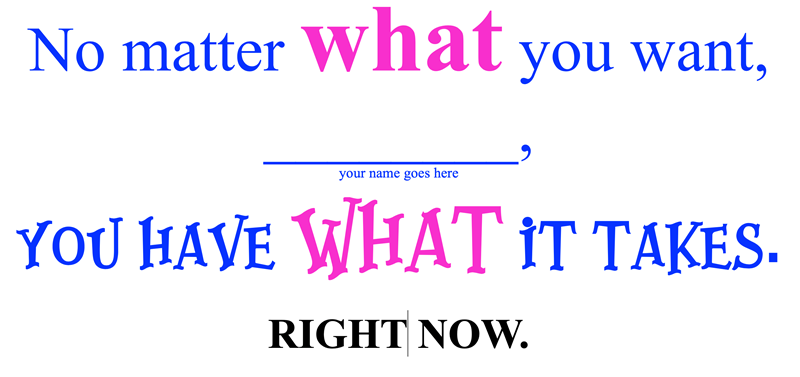
Here’s a universal affirmation. It works every time, for everyone, always and forever …
&
So, the hell with Dr. Seuss. It took me three tries, and I had to parse out the stresses by ear, but I did it. Here you go:
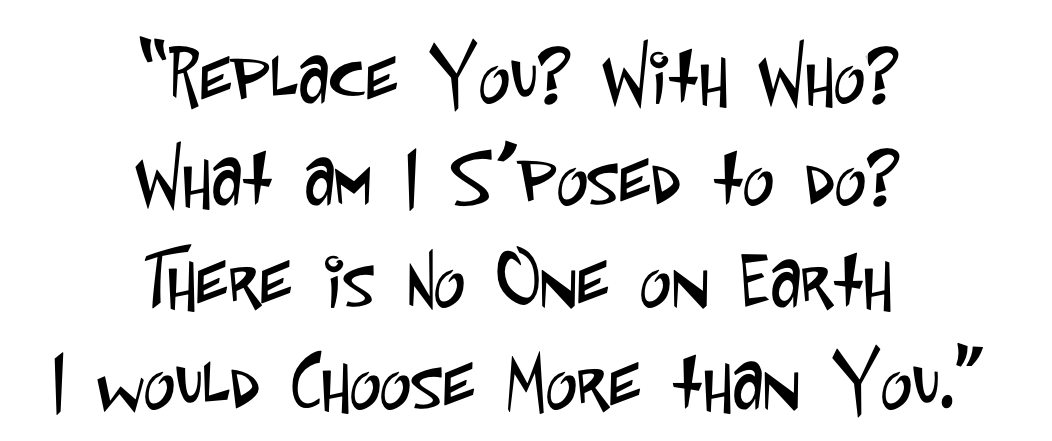
I’m still thinking of starting this book off in a different way than I ever have before—on my YouTube Channel, reading a couple of chapters a week. No, not the perfect of an audiobook, instead the imperfect of a bedtime story read aloud.
To that end, and for a squillion other reasons, I began the tedious chore of clearing out the room I intend to use for recording. There’s a marvelous wing chair, upholstered in peacock eye fabric. It’s vintage, so my feet actually touch the floor when I sit in it. Glory be.
I’ll let you know when I’m ready to start, and you can send some good bedtime reading vibes.
We’re two chapters shy of finishing Jaq! And then we still have to proof all the back matter, including all the Historicals, which, in this volume, are legion. We had a LOT of fun reading it, and I will maintain till my dying day that the only way to proofread well and truly is to read whatever it is aloud.
After we’re done, there’s a day or so needed to upload and publish it. I’ll keep you posted for when it drops. The series will be complete when I publish this last volume—the rest of Jaq’s story.
I’ve never finished a series before, not in almost thirty years of writing. It’s exciting, and sad at the same time. I’ll miss these folks. I’ll have to read my own books to visit with them again.
&
Please make this indie author happy. Choose one of my series, and read all of them. Then review all of them. That’s the way others find books.

&
Special Request:
Send me your spiritual questions please. As of now, which I’m sure you’ve noticed, I’m posting &mpersand Answers twice a week.
&
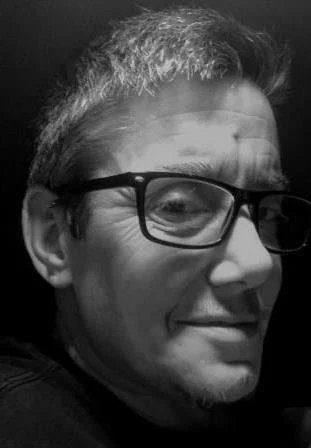
Most of you know that I learned a long time ago to live by my intuitive sense rather than logic, so that’s why I’m about to say that I can feel that there’s someone who needs a writing retreat who’s hesitating to ask for one. May I please encourage you to ASK! I’m lucky, I can schedule a writer’s conference over a meal twice a day if I need one. That’s what comes of living with one’s editor. Still, if you need a retreat to get unstuck or get started or get to the finish line, email the man. You’ll be glad you did.
Tony Amato, yes, my lawfully wedded—but he wasn’t always—is a full service, one-stop shop. He’s helped more LGBTQ+ authors, as well as others, get clear on the best way to tap into their creativity, discern their own processes, learn their craft, and come up with stellar projects. Find this genius—yes, I’m saying it, who has been nurturing authors for more than thirty years, here.
Oh, and here’s his substack Subscribe here. Also, remember that the next Body Double, the once-a-month writing workshop he facilitates, is March 19th. Write to Tony here.
&
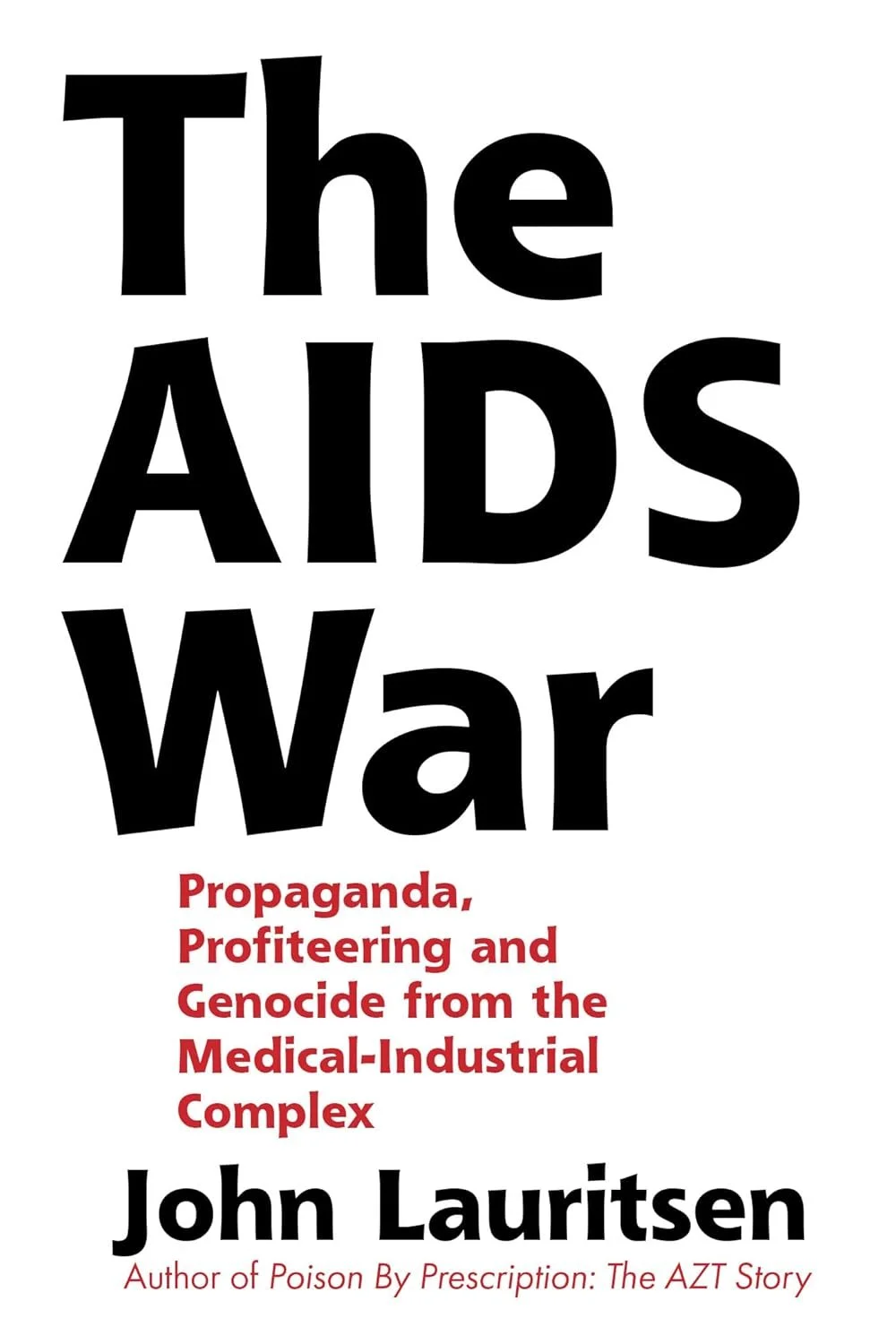
As part of my Prismatica research, I just finished reading The AIDS War: Propaganda, Profiteering and Genocide from the Medical-Industrial Complex by John Lauritsen
Here’s what the blurb says:
“This is the digital edition of the paperback edition, first published in 1993, and which has sold out of four printings. It challenged the official AIDS paradigm, that a virus causes what the author deems “AIDS,” quotation marks included. The 35 chapters discuss the toxic drug AZT, approved through fraudulent research—the unhealthy lifestyle of gay men, deadly ‘recreational’ drugs—AIDS organizations—AIDS Critics—crooked pharmaceutical companies and public health agencies. John Lauritsen is regarded as the foremost journalist AIDS critic.”
I do a lot of research for my books, most of which I never use directly, but it doesn’t matter because it informs my every word in the writing process. When I wrote Upending Tradition in The Boots & Boas Romances, I studied a lot about COVID-19. Even though I’d just lived through it myself.
I also lived through the beginning of the AIDS crisis, while working on Broadway. There were weeks at the beginning when I’d see someone in a meeting on a Friday only to notice their absence on Monday. It got to the point that meetings opened with information sharing on these dear colleagues.
One of the things that has startled me in my AIDS research is a whole group of scientists—microbiologists, epidemiologists, frontline medical doctors, researchers, and journalists—who identify themselves as “AIDS Dissidents.” As a cohort, they generally disagree with the prevailing medical wisdom on what causes HIV/AIDS. Most of them, including Luc Montaignier, the man who won the Nobel Prize in Medicine for discovering the HIV retrovirus, agree that the cause is not singular, but is, instead, a multifactorial Hydra of causes which combine, in their own macabre ways to create the syndrome we have come to know as HIV/AIDS.
John Lauritsen is the journalist at the head of the pack. This book is a series of articles he wrote and published over the course of his career. It’s shocking, it’s thought-provoking, it’s amazing, and … it could be hooey, or it could be true. I don’t know which.
&
Are you waiting for a sign?
How about this one?

Have you ever thought of your
Butterfly self?
I only ask
because Richard Bach was famous for observing,
“What the caterpillar calls the end of the world,
the master calls a butterfly.”
Give some thought
to your more important
lifetime end-of-the-world
caterpillar experiences,
Belovèd.
Did it feel like the end of the world?
I’m sure it did.
Or, I know mine did, to me.
But did I end up a butterfly?
Every single time.
And so did you.
&
I am, without doubt, certain that And is the secret to all we desire.
Let’s commit to practicing And ever more diligently, shall we?
Until next time,
Be Ampersand
&&&&