Ampersand Gazette #122
Welcome to the Ampersand Gazette, a metaphysical take on some of the news of the day. If you know others like us, who want to create a world that includes and works for everyone, please feel free to share this newsletter. The sign-up is here. And now, on with the latest …
&&&&
I’m Begging You:
Never Write With A.I.

This column isn’t so much an argument as it is a plea: Don’t use artificial intelligence to help you write. Never let A.I. do your writing for you. Don’t ask it to write a first draft and pretend that editing that draft somehow makes it your own. It doesn’t.
The problem with writing with A.I. is that it’s mentally enfeebling—an escalator toward a result when you really need to make a daily habit of taking the stairs. It undermines not only our individual ability to write but also a society’s collective ability to reason, a culture’s inner capacity to create and everyone’s reason to care.
What, uniquely, does writing do? It compels thinking in ways that silent contemplation or spoken language rarely can. It compels us to subject our thinking to the effort of articulation, the rigor of grammar, the tests of intelligibility and coherence, the inspection of others. In doing so, it also enjoins us to be clear, logical, accurate—and accountable.
The considered word matters. It has staying power and moral weight. We use the expression “I want that in writing” not only so there’s no mistaking the exact words that have been agreed upon but also as proof that the words are meaningful in the first place. But what happens when the words aren’t considered because they were written by (or with the help of) a machine?
Words become hollow. The intellectual muscle that’s exercised in everyday writing is the same one used for the writing that matters. We become better writers by the constant effort that mundane writing demands. We become better thinkers by investing into that writing a degree of attention we’d never give it if we relinquished the task to A.I. We become more creative when we learn how to put a personal stamp even on routine things, making them unmistakably our own.
The next time you’re tempted to just adopt an automated response for a text message or an email, don’t. Type out a response that’s your own. Think of it as an act of free will. What takes you a few additional seconds is an act of resistance against an ever-dumber world.
Excerpted from an Opinion Essay by Bret Stephens in The New York Times
“I’m Begging You: Never Write with A.I.”
August 4, 2026
When I was growing up, my mother had a strict rule about gifts that were given to us by persons who weren’t present when we received them. Namely, you can’t have your … whatever … until you’ve written a thank-you note.
I thought then, and I still think, that thank-you-note writing is some of the most tedious. Dear Mimi, I’d write my paternal grandmother, thank you for the … whatever. Then, there was nothing more to say.
But the page wasn’t filled. I hadn’t really said anything except the obligatory thank you, and I still had half the page to go. What to do?
Well, I’d tell her how I’d enjoy her gift. Where I’d play with it, and when, and maybe even, with whom. I’d bring her into my everyday life, which she so sorely missed, even if I didn’t miss her, as I hadn’t any experience to the contrary.
I’m sure A.I. could write me a humdinger of a thank-you-note for Mimi, although she’s long dead, but would it be real? I say, No, it wouldn’t. She was my grandmother, and she wanted to hear from me. Personally.
For the most part, I’m on the fence about A.I. except for when it comes to fiction. Then, I’m a mad demon for No, No, No, Absolutely not, next question!
I say if I’m writing fiction, it is my responsibility to let it arise out of me because that is what my readers want. Fiction, not regurgitated phrases from other writers.
On the other hand, if when I am writing fiction, I need to know when Midsummer Day was in 1983, A.I. is the perfect research assistant. A.I. found what I needed within seconds, and I kept on writing my scene.
I don’t know how you are parsing the use of A.I. for yourself, but I’d like to encourage you to give it a serious think. The criterion I’m using is a simple but effective one, so I’ll share it here, that you might also consider it.
How high are the personal stakes in whatever you’re thinking about using A.I. for?
For a thank-you-note, very personal. For a novel, extremely personal. For a memo announcing that the Fourth of July picnic starts at 1 instead of noon, not so personal.
Put on your ‘recipient’s’ hat. Will it matter to them that you took the time, the focus, the interest, the energy to connect personally? If it will, and you’ll know the truth about this in your body, then I’m with Bret Stephens. Don’t use A.I.
A.I.—just look at the name. Artificial. Intelligence. Artificial, fake, unreal. A.I. trivializes the personal, and since persons are the beings whose spirits hold their souls, the personal matters. In fact, sticking with the personal, for thank you notes and emails as well as novels, is probably the only way we’ll ever even begin to create a planet where everyone is honored, included, considered in a world that works for everyone. No exceptions.
&
The beginnings and endings
of all human undertakings are untidy.
John Galsworthy, author, Nobel laureate
The Question:
How can I sustain my certainty despite the untidiness?
&mpersand Answers:
Oh, yes, untidiness can be a real turn-off, can’t it? But think. Isn’t it true that almost everything worthwhile begins in some degree of chaos?
Richard Bach of Jonathan Livingston Seagull fame wrote another book that’s one of my favorites. It’s called Illusions: The Adventures of a Reluctant Messiah. In it, there’s a magic book that one can open to find the solution to anything.
One of the quotes is: What the caterpillar calls the end of the world, the Master calls a butterfly.
Consider your own life experiences, Beloved. Can you think of a caterpillar moment in your past? I sure can. More than several, if I’m honest. And most of them turned out to yield butterflies in the best sense of the world.
So, to conquer untidiness, the first order of business is to see it, acknowledge it, and let it be what it is. The moment you go into resistance to it, you’re perpetuating it, and perhaps even making it worse.
Second, remind yourself that this stage is NOT permanent. So often we get caught in situations that are, in fact, in the process of changing, but … our resistance makes the difficulty like Velcro to our consciousness.
Third, pick one thing. Let’s call it, a pair of scissors, and put them away where they go. One. That’s all.
The first verse of the Hebrew Bible reads: In the beginning, God created the Heavens and Earth, and the Earth was without form and void, and the Spirit of God moved upon the face of the deep.
Well, the face of the deep, dear one, was nothing less than the chaos—which is really a code word for potential—that always, but always precedes cosmos. They’re a matched set, Belovèd. Chaos and Cosmos.
Now, find one more piece of the mess, and put it away. Smile at the untidiness of the chaos, then wait. It’ll change.
&
Here’s a universal affirmation. It works every time, for everyone, always and forever …
&
The moment I thought I was back in it with Betrayed, Book 2 of Prismatica, I got crystal clear guidance that I needed to do some serious theology. I can just hear you. Theology, did you say? Yep.
I know now what the explicit mission of the karma cohort is, and that the whole crew of them has to be prepared to answer all sorts of theological, really, but we know them more informally as religious, objections. So my nose is bridge-deep into some of the books that I’ve lugged around in the years since seminary.
I’m bouncing all over the place, too. From Genesis to 1 Timothy, Leviticus to Romans, with a layover in 1 Corinthians. I’m reading commentary, meditating like a fiend, asking for clear guidance, and getting amazing answers most of the time.
And you thought I just wrote fiction. Ha!
Just to be clear, this is one of my favoritest of pastimes. Research, thinking, postulating, thinking, theorizing, thinking. Did I say thinking? You’ll be quite surprised what I’ve come up with so far. I certainly am, and that’s sayin’ somethin’.
Mex, or maybe Taming of the Shrew, is still calling me. I’m looking forward to the first Mex written about a play, and not a musical, per se, although, as I said last time, there is a Shrew musical called Kiss Me, Kate. I don’t know it well, and what I know of it, I really don’t like … and I LOVE the play.
It will not surprise you that I played Kate in a Renaissance Fair production of the show many years ago. And it was a blast. The guy I played across from, as my Petruchio, was about half my age, but a really good physical comedian, so he did all sorts of things like dip me into a magical swoon for a kiss, and then, instead of kissing me, dropping me onto the hard ground.
We laughed a lot during the show.
I mostly like Shrew because so many scholars consider it a “problem” play. If you happened to read any of the comments on the all-female production done a few years ago in Central Park, you’d know what the “problem” is. Our modern eyes call how Petruchio treats Katerina abuse. Was it? I’ll have to write Shrew This! and you’ll have to read it to find out!
Mex Book Eleven takes place during the Covid-19 shutdown. Anchored in an all-female production of Taming of the Shrew presented by the residents of a safe-house shelter, it addresses intimate partner violence. The spiritual healing modality is the use of mandala.
&
Please make this indie author happy. Choose one of my series, and read all of them. Then review all of them. That’s the way others find books.
You could start with one of the five butch-femme romances in Boots & Boas, which is an ongoing series with many more planned. Or, you could try The Subversive Lovelies—the stories of four siblings in the Gilded Age who just cannot manage to follow the rules! This series is complete. Or, of course, there’re always The Mex Mysteries … the first one is Oklahoma! Hex. And there are eleven of them, please, be my guest! There’s always the option of starting with one series and reading them all! That’s what I do when I fall in love with an author.

&
Storytelling is how all humans make meaning. We do it all the time, but what happens when you have a story so big, so deep, so overwhelming that you need help to hold it?
The biggest ups and downs of our lives are the stuff of theatre, of course, but also of memoir. Tony Amato is a master of memoir. It doesn’t matter if your story is the founding of a worldwide educational movement or your journey with cancer or your grief at an unfathomable loss. Tony Amato is an editor committed to your voice. Perhaps I’ll be allowed an italic here (he usually deletes them from my manuscripts, but I will persist in using them …)
Tony Amato is an editor committed to your voice.
When it comes to telling your story, and there are myriad reasons to do so, sometimes it’s hard to settle on the voice that best tells it. This is where someone holding the container for your story is invaluable.
If it’s time for you to write your story, may I introduce to you the man who has for more than twenty years held all of my stories and edited all of my books, Tony Amato? This is the guy, for real. Find Tony Amato here.
&
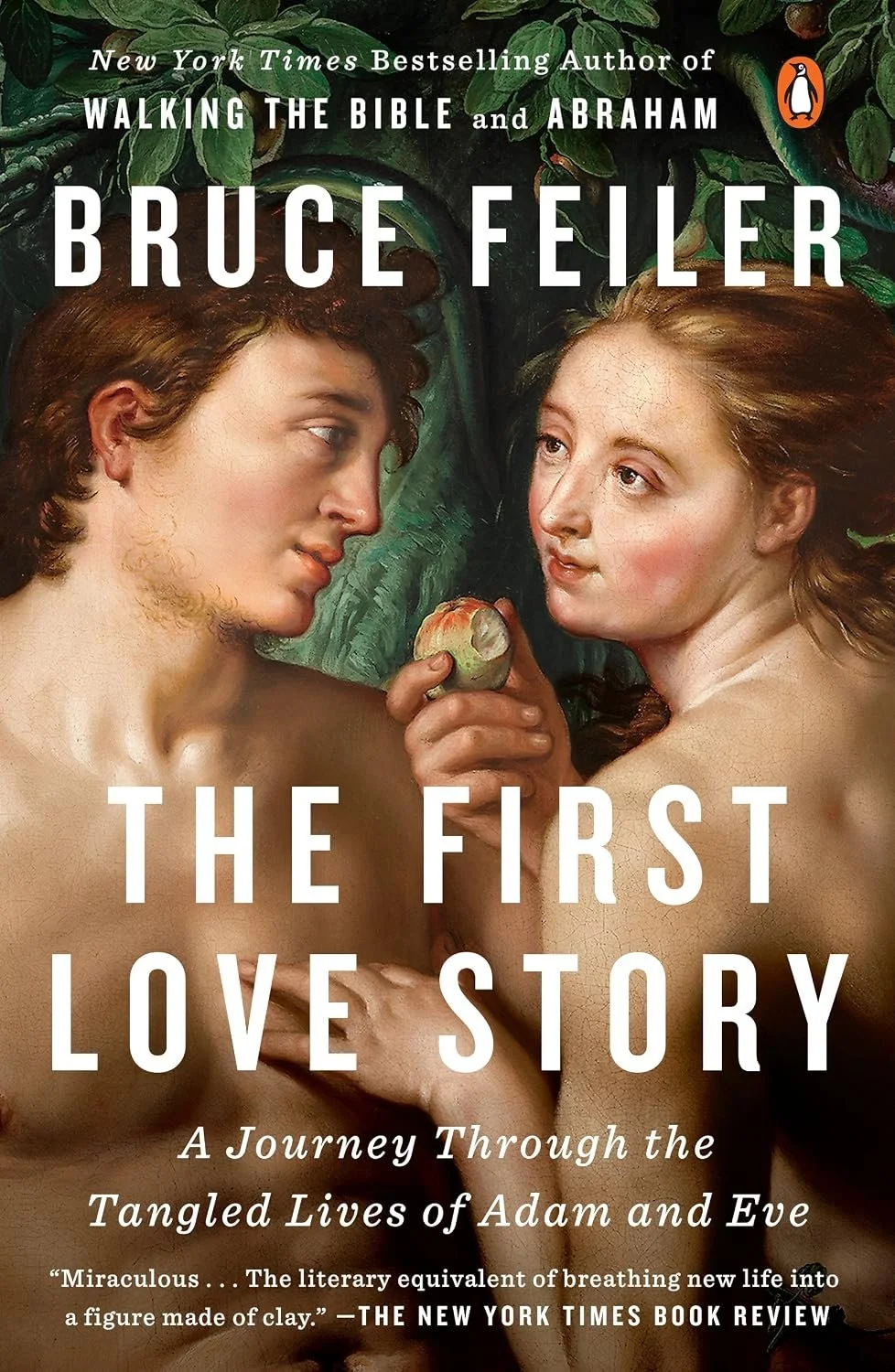
The First Love Story: A Journey Through the Tangled Lives of Adam and Eve by Bruce Feiler
I rarely re-read books, but this one practically jumped out of my Kindle at me when I got stuck in a section of Betrayed, the second Prismatica book. It turned out to be exactly what I needed. (See how I snuck in those itals?) I enjoyed it the first time around, but the second was sheer delight.
From the blurb:
From the New York Times bestselling author of Walking the Bible and Abraham comes a revelatory journey across four continents and 4,000 years exploring how Adam and Eve introduced the idea of love into the world, and how they continue to shape our deepest feelings about relationships, family, and togetherness.
Since antiquity, one story has stood at the center of every conversation about men and women. One couple has been the battleground for human relationships and sexual identity. That couple is Adam and Eve. Yet instead of celebrating them, history has blamed them for bringing sin, deceit, and death into the world.
In this fresh retelling of their story, New York Times columnist and PBS host Bruce Feiler travels from the Garden of Eden in Iraq to the Sistine Chapel in Rome, from John Milton’s London to Mae West’s Hollywood, discovering how Adam and Eve should be hailed as exemplars of a long-term, healthy, resilient relationship. At a time of discord and fear over the strength of our social fabric, Feiler shows how history’s first couple can again be role models for unity, forgiveness, and love.
Containing all the humor, insight, and wisdom that have endeared Bruce Feiler to readers around the world, The First Love Story is an unforgettable journey that restores Adam and Eve to their rightful place as central figures in our culture's imagination and reminds us that even our most familiar stories still have the ability to surprise, inspire, and guide us today.
&&&&
Utterly delicious prose. A tightly proven premise. More references to world history and culture than you can imagine. Bruce Feiler’s book The First Love Story is well worth your reading time. How do I know? Because when I re-read it, I went from 96 highlights to 778 + 7 notes! The book is highly engaging, delightfully provocative, and will send you into your own musings about how love has worked in your own life.
&
Are you waiting for a sign?
How about this one?
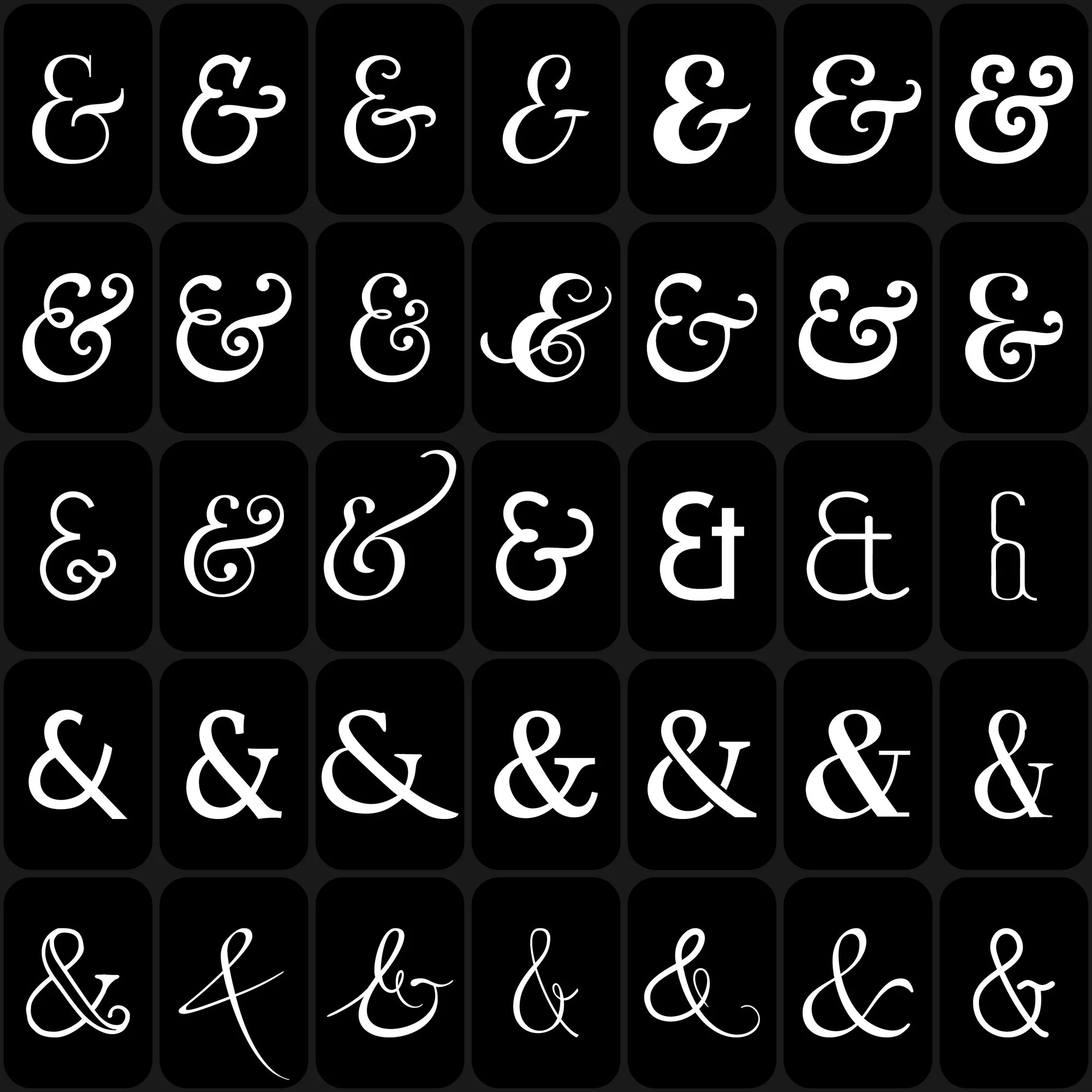
There are as many kinds of
AMPERSANDS
as there are typefaces.
Thousands.
It’s a symbol that’s drawn me
since I first saw one
as a kid.
It used to be the last letter
of the alphabet.
Did you know?
But here’s why I chose this image
for today.
Just as there are lots of different
ampersands,
there are lots of different
ways in which we can and do
say
AND
instead of
OR.
Your AND is different from mine.
Mine, from yours.
And those differences are what
make all our ANDS
add up
to a world that works for everyone.
NO EXCEPTIONS.
Watch for how often you choose
AND instead of OR
this week,
Belovèd,
And remember that as you include
everyone in the blessings
you choose for yourself
and your loved ones,
watch those blessings
naturally cascade
into your life.
&
I am, without doubt, certain that And is the secret to all we desire.
Let’s commit to practicing And ever more diligently, shall we?
Until next time,
Be Ampersand
&&&&
P.S. There have been some inquiries about donations and tax deductions. Sanctuary, the organization which umbrellas all of my work is a 501(c)3, and donations are fully tax deductible.
Donate here using this address via Paypal. Or send a check snail mail to: Sanctuary, 16 Van Gaasbeck Street, Kingston, NY 12401.