
Ampersand Gazette #119
Welcome to the Ampersand Gazette, a metaphysical take on some of the news of the day. If you know others like us, who want to create a world that includes and works for everyone, please feel free to share this newsletter. The sign-up is here. And now, on with the latest …
&&&&
Is a ‘Frictionless’ Society a Trap?

“Frictionless” used to be an intensely physical word. It first thrived in the late 1880s, when the engineers of the Second Industrial Revolution were scrambling for new lubricants to keep factory machines from grinding themselves to bits.
Today’s use, though, comes from computing, in which “friction” is anything that stands between a user and the completion of a task. Good experiences are supposed to be frictionless.
But the main thing that has come to annoy people is more philosophical. A futurist named Thomas Klaffke warns that “frictionless” is not just a word but also a worldview—a “super dystopian” vision of “no toil, no effort, no thinking.” Essayists fret that the dream of a frictionless existence is making people fearful and lonely, unable to tolerate challenge or discomfort. (Friction, after all, is what happens when two things touch.)
A piece in New York magazine evangelizes “friction-maxxing”—in which, rather than seeing “life itself as inconvenient and something to be continuously escaping from,” you build your tolerance for difficulty by doing things the rough way. A huge share of human wisdom—intuitions about child-rearing, research on education, adages about the meaning of life—revolves around the idea that too much ease really does lead to helplessness and stagnation.
If it’s any consolation, though, there’s at least one reason you might worry slightly less about this. When you hear “frictionless” today, how often is it about a system that clears the path toward your goals, as opposed to the system’s designers guiding you toward theirs?
This is in fact part of what writers like Klaffke warn about—the amount of time we spend being herded through a landscape built to discourage us from thinking, acting disruptively or deviating from a set path. It can be weirdly encouraging, though, to imagine our most annoying battles with that environment as a positive sign. The idea that modern society is dangerously geared toward hyperconvenience can be easily punctured by a single phone call to your health insurer.
Excerpted from an On Language Column by Nitsuh Abebe in The New York Times
“Is a ‘Frictionless’ Society a Trap?”
July 2, 2026
Okay, so let’s start with the inanely obvious. Friction is the goal of a great many things, being as is said above, “when two things touch,” amongst them the one that leads to procreation. I daresay without friction, that’s a singularly thankless task. Just sayin’.
My favorite example of friction these days is carrots. Yes, carrots, the orange kind that grow underground. For those agriculturally-challenged amongst us, ground, or more specifically, underground, is where the farmers keep the dirt.
Thus, when Farmer Peggy yanks a happy bright orange bunch of carrots out of her field, they come out of the ground dirty.
That dirt is what I consider friction. Here’s why:
That dirt is washed off the vegetables, sure, but little invisible bits remain. Those little bits of dirt are what actually power the human immune system, put in the simplest way possible. Namely, if you really are eating “pure” or “clean” carrots, there’s no dirt. No dirt, no immunity. One and done.
BAD IDEA.
Especially for a person who is writing a series of books that rewrite the AIDS Crisis. It will not surprise you to learn that immunity pops up quite a bit. I want to say, is there dirt on your carrots?
And if there isn’t, go get some.
Dirt on your carrots makes you more creative. It seems impossible, I know, but like the White Queen, I have been known to believe six impossible things before breakfast. Like, try this one.
I just spent five days in the hospital, and relatively frictionless days they were. The staff were awesome. The docs did a mean Chicken Little Imitation, but they kept a reasonable lid on it. Even the food was good!
What was slightly frictionifying (yes, I just coined a new word) was the discovery that I’d had a major heart attack some days previously. Because they couldn’t pinpoint the date, the cardio guy and I settled on July 4, 2026, as the commemorative date, because it would be easy to remember.
And instead of insisting that there be no effects of an event like this one, I decided to go with, Okay, we’re starting a new reality here. Where’s the dirt? What would make it fun? Creative? Curious? Worth learning about? Interesting? Nay, fascinating? Full of the best kind of friction? Fiction?
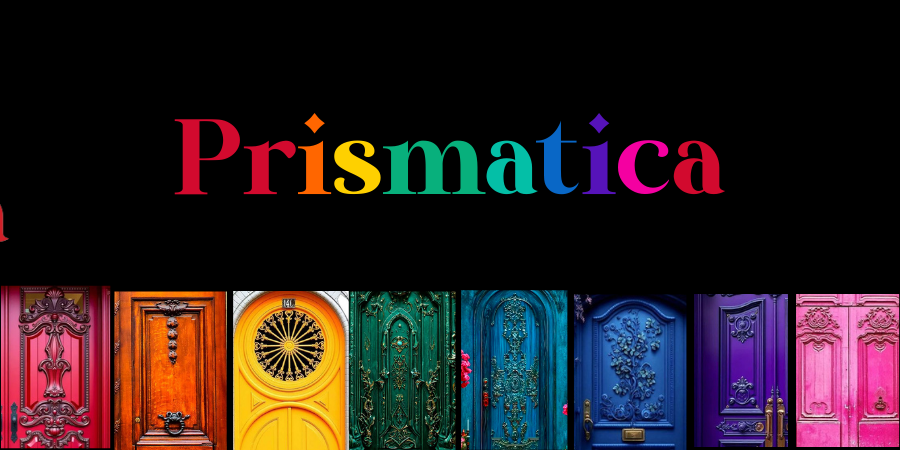
We ended up doing molto research about blood, which is, inevitably, connected to one’s heart, which turned out to be the perfect thing I needed for the next part of the second book of Prismatica! I cannot make this stuff up.
So, grateful for a pain-free, over-and-done-with major heart attack, I am now home, writing once again, this time about carrots and friction, and how grateful I am for the friction which conscientious carrots provide, oh, and eating them as well.
&
By making the self a better place,
you make the world a better place.
American sociologist, Marion Goldman
The Question:
How can I make myself a better place?
&mpersand Answers:
First, let’s note the best part of this advice, and any really good advice: Start where you are with what you have.
Because … How are you ever going to start somewhere you’re not with what you don’t have? (And yet, we try to do this all the time!)
Second, get some paper and a pen, lipstick, pencil, crayon, and start a list of What’s Right With Me. Do it right now. Stop reading, and do it.
Third, notice how you start to get a little silly making a list like this. Crack a few small smiles. Maybe a smirk or two. Snort. Crack yourself up. Belly laugh. Read the list out loud. Act it out. Put music on and dance your list. Watercolor it. Eyeshadow it. Hang your list on the fridge. Frame it. Glitter it.
Now look behind you. See the part of you that was feeling so crummy? Put that part in your lap. Snuggle up. Cry a little. Have a big tantrum if you want. Shout it out. Hell, tweet it out. But let it out. Show that part your list. Ask what it needs. And as best you can, fill that need.
Usually, it’s only a small part of us wanting some attention in a healing way that makes us feel like the self isn’t a good enough place.
And remember the little girl whose frustrated father tore up the newspaper picture of Earth into tiny pieces just to get a little quiet. His instructions to his daughter were to put the world back together. She was back in two minutes flat.
“Wha’ happened?” asks dad, panting. “Oh,” says she. “There was a person on the back of the page. I just put the person together, and I figured the world could take care of itself.”
&
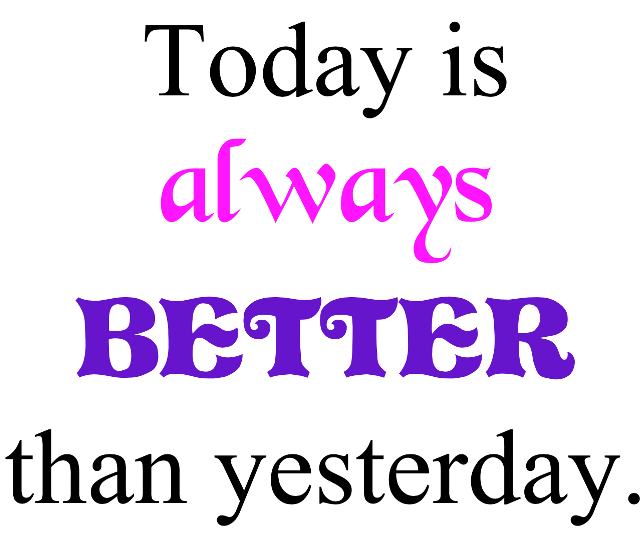
Here’s a universal affirmation. It works every time, for everyone, always and forever …
&
You will not be surprised that I did not increase Betrayed’s word count whilst I was in the hospital. I did, however, spend a great deal of time thinking—about grief, about hearts, about blood (see above.) So the book was front and center in my mind despite how busy my body was learning about having a new heart normal.
No mistakes. One of the seminal pieces of art created during the AIDS Crisis was essentially a morality play written by Larry Kramer. He called it The Normal Heart, after a line in a poem by W. H. Auden, “September 1, 1939,” which features the famous plea, “We must love one another or die.”
I saw its original incarnation, and to this day, it remains one of the major memories of my life in the theatre. Chilling.
If you’ll recall from last issue, I had to ask: where do I feel betrayed? Playwright Jack Neary’s The Porch begins with a comment: “No wonder his heart attacked him.” Spoken in the very best Boston Southie you can muster.
In the past week, I’ve begun to wonder, and, at long last, to answer the question.
I definitely miss Mex! Time away from the computer allowed me to live a little into my own longings, and Mex was at the top of that list when all was said and done.
Book Eleven is called Shrew This! and it takes place during the Covid-19 shutdown. Anchored in an all-female production of Taming of the Shrew presented by the residents of a safe-house shelter, it addresses intimate partner violence. The spiritual healing modality is the use of mandala, one of my favorite methods for calming my nervous system. Coloring. Seriously.
And, just because the Universe is the Universe … I ended up with a cardiologist named Dr. Mondal. An East Indian cardiologist named Dr. Mondal. What a world.
Please make this indie author happy. Choose one of my series, and read all of them. Then review all of them. That’s the way others find books.
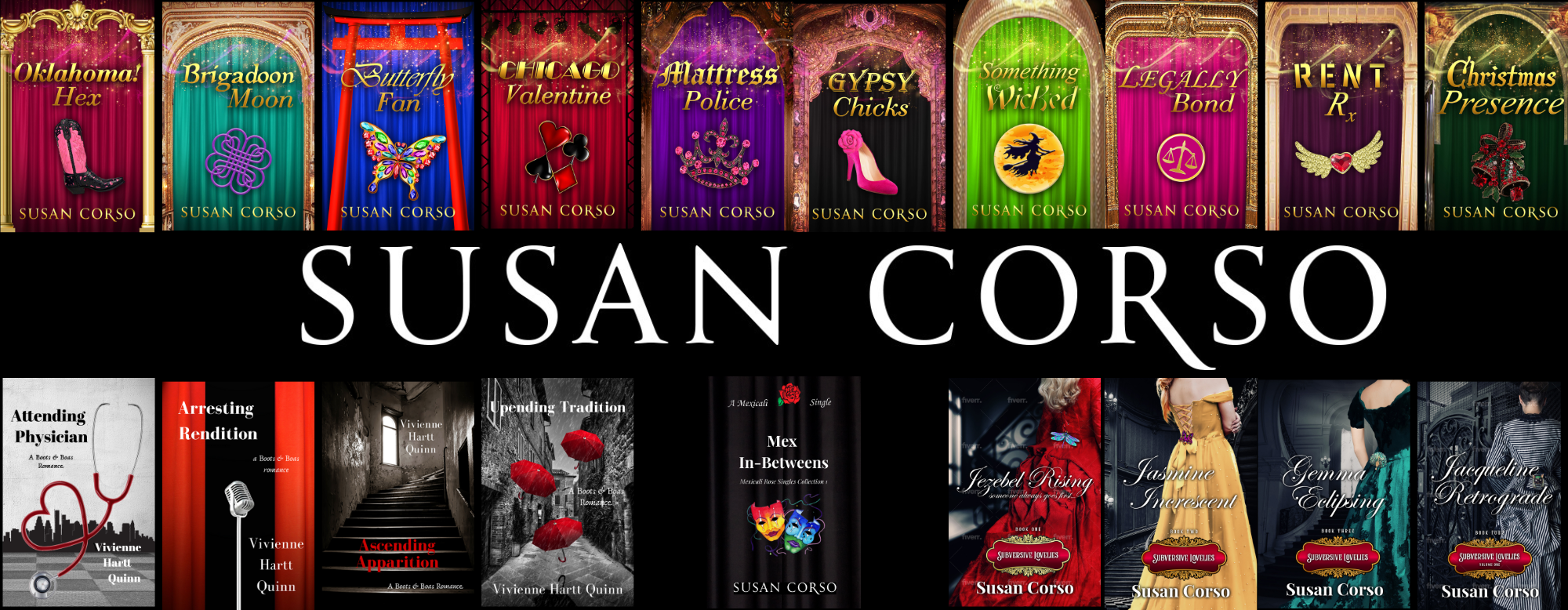
You could start with one of the five Boots & Boas Butch-Femme Romances … perfect summertime reading. Or, The Subversive Lovelies, speculative historical fiction. Or the Mex Mysteries, all eleven of them. Or, there’s always the option of starting with one series and reading them all!
&

&
Beloved Folx, as Susan and I prepare to begin her dialysis/transplant adventure, I am starting this account so I have a place to keep you all updated, share our challenges, our joys, and the things we learn along the way. I'll post medical and fundraiser updates, pictures, and assorted sillinesses, and I'll read Susan your messages. Thank you for being the wonderful, generous, Beloved Folx that you all and you each are!
These are the words my beloved editor of many years, and beloved husband of far fewer, wrote about our life together a week ago today. I’m home from the hospital, as I said, newly heart-attacked and dialyzed. God love the man.
And still, all during this fraught week, Tony found time to talk to me about my books—one of the few ongoing indicators that life as we want it to be will continue. He did research, he read aloud from websites, he brainstormed special, secret science for my new series all the while taking care of me, himself, the cat, our home, and his extraordinary clients.
This is a man whose first name might as well be Commitment. He has one to his own growth, to mine, to that of our marriage, to the world, and for every single author he serves. I’m not the first one whose books he’d discussed in a healthcare setting, she said euphemistically.
Is it time you had a committed container for the stories of your life that need writing? I know a guy. This is the guy, I promise you. Find Tony Amato here.
&

Unstoppable Liv Beaufont: The Rebellious Sister (Book One of Twelve) by Sarah Noffke & Michael Anderle
It might surprise you, but I did very little reading whilst I was in the hospital. It was far easier to daydream, bookdream, and nightdream. I did not, however, go without a Book Plan.
Thus here’s the Book One blurb for The Unstoppable Liv Beaufont:
“Liv Beaufont hasn't used magic in five years—and that was exactly how she liked it.
But when her brother's murder leaves the House of Seven short a Warrior, she's dragged back into a hidden world of magicians she thought she'd escaped forever.
Now she's untrained, outmatched, and expected to enforce laws she doesn't believe in. The council that locked away her powers wants her to fail. Her snarky talking cat thinks she's being dramatic. And somewhere in the shadows, whoever killed her brother is still watching.
Liv doesn't have centuries of training or powerful allies. What she has is a stubborn streak a mile wide and enough raw magic to shake the Earth—literally.
The House of Seven has rules. Liv's about to break every single one.”
* * *
The books are utter fluff, YA, every paranormal you can imagine, popcorn. I’m on Book Seven as of today. Still, there’s good world-building, enough intrigue to stay interested, and decent character development. If you need a mental holiday from thinking, try Liv Beaufont and her sibs.
&
Are you waiting for a sign?
How about this one?
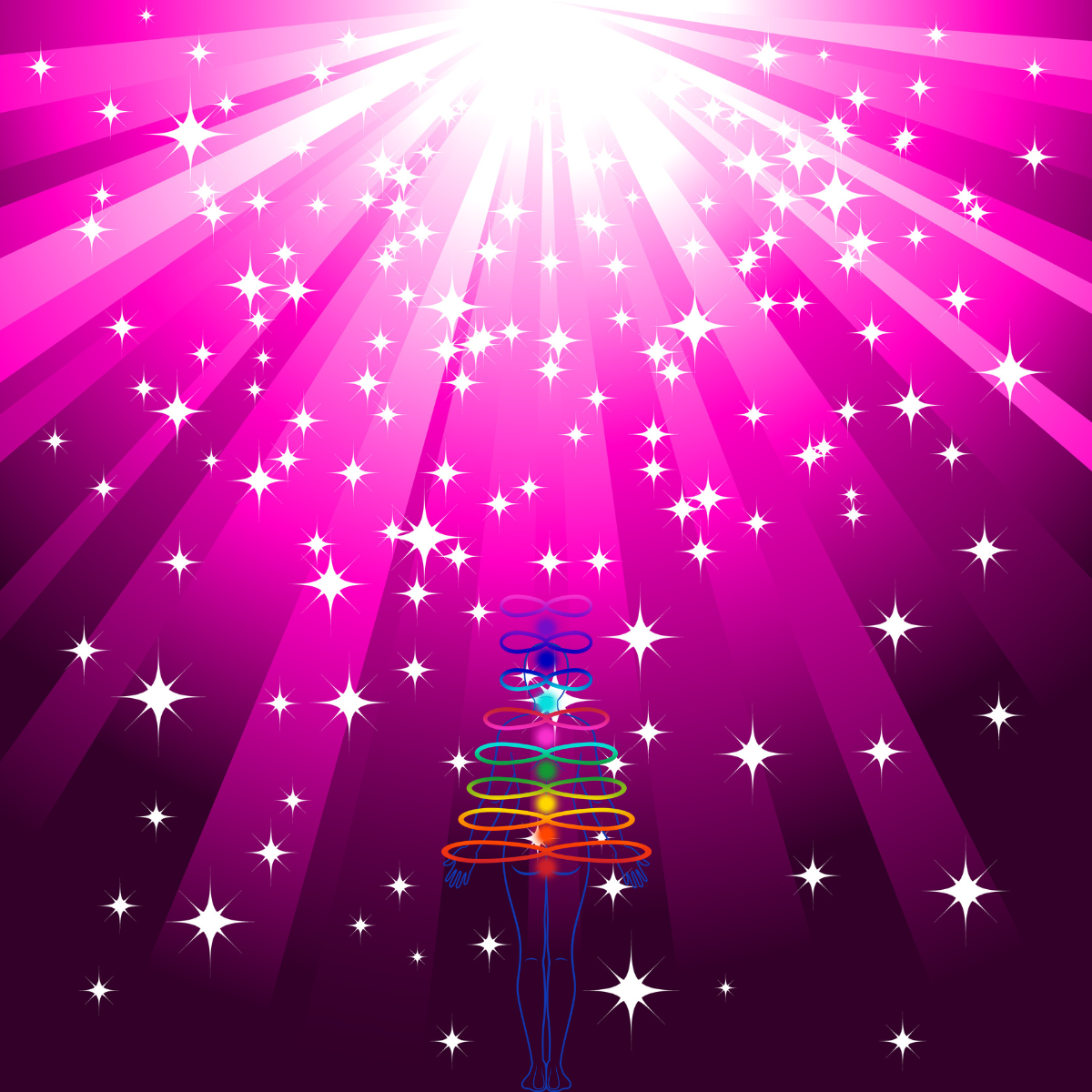
This is it.
This is what I visualized
the entire time I was
in the hospital
healing from a stealth, painless
Major Heart Attack.
In chakra-speak,
God’s Compassionate Love
POURING
down upon, in, and through my every cell.
The Color Infinities
you see are the
connections between
all the chakras.
What happens to cause a major
Heart Incident
is between the owner of that
Heart and her Divinity,
so that’s where I turned.
That has been my spiritual work
since the Fourth of July.
If there’s something you need to
get to work on, get to it, Belovèd,
and enjoy your carrots.
&
I am, without doubt, certain that And is the secret to all we desire.
Let’s commit to practicing And ever more diligently, shall we?
Until next time,
Be Ampersand
&
Post Scriptum:
Members of our community are in the process of constructing an opportunity for financial support during this time when I, you can imagine, can do very little work. Please expect an appeal letter with more details soonish, and let me thank you in advance if you feel moved to donate.
All donations to Sanctuary are fully tax-deductible.