
Ampersand Gazette #103
Welcome to the Ampersand Gazette, a metaphysical take on some of the news of the day. If you know others like us, who want to create a world that includes and works for everyone, please feel free to share this newsletter. The sign-up is here. And now, on with the latest …
&&&&
The Greek Heroine Who Shows Us That We Aren’t Ever Truly Powerless
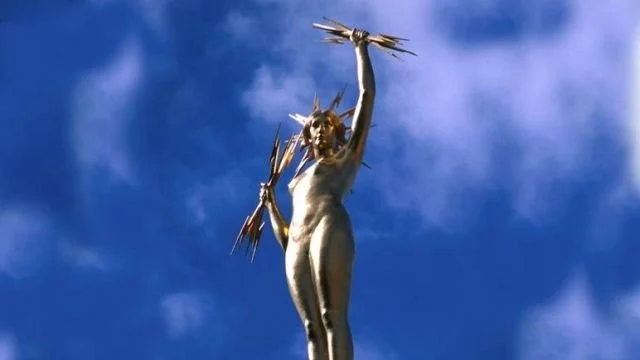
Screaming into the void has roots in “Electra,” which has a lot to teach us about the thrill—and limits—of raised voices.
Everyone seems to be screaming into the void these days. There’s even a website designed for this purpose, screamintothevoid.com, where users are instructed to “type your feelings here” and then hit a big red button that reads “SCREAM.”
I have taken to writing all of this down in a little journal I have labeled the “screaming notebook.” In it, I record whenever an interesting scream crosses my path in conversation or stray news items. The book fills quickly.
Around the same time that I began keeping the screaming notebook, I also began reading one of the oldest plays about a screamer, Sophocles’ “Electra.” Specifically, I was reading Anne Carson’s translation.
When the play opens, Electra’s world is a shambles of corruption, violence and grief. Her father, Agamemnon, had killed one of her sisters as a human sacrifice to Artemis; in revenge, her mother and mother’s paramour have murdered her father. Because Electra is unmarried (her name can translate to “unbedded”), she has no power, no status, no social function. She is expected, as a dependent in her mother and stepfather’s household, to suppress her own horror at her father’s murder and return to life as usual—to accept the terms of her new reality. Ten years have passed but, still, she cannot reconcile herself to it.
Instead, she screams. In fact, Electra—who has one of the longest speaking parts in all the Greek tragedies—“talks, wails, argues, denounces, sings, chants and screams from one end of the play to the other,” Carson writes. “Sounds of every kind emerge from her, articulate and inarticulate.” She points out that Electra screams more than any other figure in Sophocles’ work.
In Carson’s introduction to “Electra,” she describes the protagonist as profoundly stuck. “She is a woman stranded at doorways, and passivity is killing her,” Carson writes. “There is only one thing she can do. Make noise.” In this way, Electra’s screaming becomes both an emblem of her frustrated agency and her one form of action.
But there’s one reading of Electra’s screaming that has kept me from thinking of her as a purely tragic example of what a person might do when the world loses its moral coherence. The religious ethicist Fannie Bialek, the author of “Love in Time: An Ethical Inquiry,” pointed out to me that while the play is largely about a woman screaming in frustration at her inability to change her circumstances, the story doesn’t end there. In fact, Electra’s screaming, which seems at first like an emblem of her stuckness, is also a form of refusal, a way of extending time until she can formulate her next move. It prolongs the narrative that began with her sister’s murder and will end, she hopes, with justice.
“Broken by what we see, we become rupture incarnate.” To inhabit that rupture, to allow the wound to remain open, preserves a kind of possibility—many things could yet happen. The way things are, intractable as they seem, is not the way they must always be. “This wound is essential,” Aziza wrote. “Into this wound, imagination may pour.”
That quote is the last thought that I have jotted in the screaming notebook. One wonders if Electra would have found a less violent ending had she been offered this idea. Into this wound, imagination may pour. It is certainly not a balm. What it invites is the hardest work: to allow the warping pain of the world to open you and then to stay that way, avoiding madness or callousness, long enough to turn yourself into a vessel for imagination. This is how people have always called forth better stories than the ones they’re living, and then made those stories powerful, sonorous, undeniable.
Excerpted from an essay by Jordan Kisner in The New York Times
“The Greek Tragedy Heroine Who Shows Us That We Aren’t Ever Truly Powerless”
November 11, 2025
This is not the first instance of primal scream I’ve seen in the last ten months, since the take-over of the White House by forces of tragic proportion, yes, even Greek. In fact, I might even go so far as to suggest that primal scream has, in its own peculiar way, become something of a touchstone for our era.
The morning I sat down to write this essay, the Toddler-That-Is had just renamed the U. S. Institute for Peace, a venerable institution established in 1984, for himself, wherein he is hosting the historic signing of a peace treaty between Rwanda and Democratic Republic of Congo today. Self-serving much?
The point to be made about Electra’s scream, and the ones we are hearing all around us these days is that they are a form of action. Even postponement is a form of action. Any metaphysician worth her salt knows that baby steps, small actions, are what add up to big changes.
Now I do not in any way mean to imply that the actions we’re seeing from Washington are anything like what add up to big changes. Only constructive actions do that. Destructive ones merely destroy, which is what we’ve witnessed for the last ten months, and likely will continue to do so during their excruciating tenure.
But the trajectory of those long months seems to be slowing now. People, screamers included, are asking for deeper looks into the small (and large) destructive actions we’ve been witnessing. Perhaps enough that a sea change is on its way, or perhaps not, but … there’s always the primal scream.
Electra’s screams, much like our own, are after-the-fact screams, not preventative ones. Would that we could have prevented a great many things from the past few months, but we didn’t, and so are left with the Pay-Attention-Primal-Screams that remain.
And, by Grace, in this Season of Light that comes slowly awake in the darkest of the dark part of the year, those screams do remain, so we do look when there’s more light. Primal scream works for individual hurts like Electra’s, and collective ones like ours. They draw attention. That is enough.
So if at any point during this holiday season you’ve had enough, go ahead, lift your voice, scream, baby, scream, and know that you are not alone, and that our small individual screams will soon enough add to enough others that change will again be upon us.
P. S. When that happens, and it will, someone please remember to restore the proper name to the U. S. Institute of Peace.
&

Cory Booker on What It Takes to
Believe in America Again
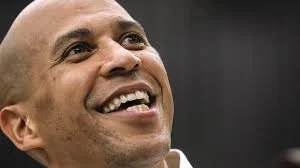
“If America hasn’t broken your heart, you don’t love her enough,” the New Jersey senator argues.
In the November 24, 2025 issue of The Times, David Leonhardt sat down with Senator Cory Booker for a wide-ranging, in-depth interview. I’m going to use it as a jumping off point for Ampersand Answers, my new spiritual advice column.
“What is a bigger challenge for me as an American right now is trying to figure out: How do we, as a country, deal with what I think is an even greater threat—the one that he exploited? Because he’s a symptom, I think, of a deeper problem.
“And that deeper problem lies in how tribal we’ve become as a country, how we are being told on all of the major platforms that are competing for our attention that we should hate each other, that we are so different, that we are existentially a threat to one another. For me, that is, in this environment, actually working to undermine our ability to meet our common pain. Because I go around this country, and I see that we have a deep common pain—but we do not have a sense of deep common purpose.”
Excerpted from an Interview in The New York Times
“Cory Booker on What It Takes to Believe in America Again”
November 24, 2025
So, here’s the question:
Where and how do we find that common purpose?
&mpersand Answers: In its simplest form, we seek it.
We look past the tribal, past the competition, past the hatred, past the threats. We, like Electra (see above), see and allow ourselves to sit with our common pain.
No one deals well with the alienation that’s surrounding all of us, Belovèd. No one. Not even the ones who are purveying it as gospel truth. Humankind is a group species.
Sitting with pain, especially shared pain, when we disagree on how to handle it is hard. Unlike a situation like 911, wherein we banded together because we knew we were in it together, this pain has many variations.
For some it’s immigration, for others antisemitism, or anti-Islam, or anti-anything really, for some it’s abortion, for some it’s the economy—I could make a list so long that it would fall off this page, but the common denominator is pain about some aspect of everyday living.
Sitting with our own pain is hard. Sitting with the pain of others can go either way. It can be harder or easier. If we share the pain, and it’s a common one, it tends to be easier. If we don’t share the pain, and it’s not a common one, it tends to be harder.
Either way, sit with the pain in yourself, and witness it in others.
Sometimes that’s all it takes for a solution.
A real solution is always common purpose, so everyone involved in it has a stake in its success. And don’t be too quick to race to the solution either. Sometimes taking time with the pain makes the solution really easy. It’s when we rush things that we get stuck in pain.
Senator Booker finished the interview with, “If I’m going to try to do anything in the coming years, it is to reclaim a deeper, more meaningful patriotism that’s not symbols and slogans—it’s a shared devotion to shared ideals.”
&
Here’s a universal affirmation. It works every time, for everyone, always and forever …

&

One more sonogram done—biopsies next, but I’m not worried. A female housekeeping procedure Friday past, and I’m still very much in recovery mode but happily regaining my stamina. Now onto writing news …

I’ve been diligently editing and working through all the small decisions that sustain a long book series for Prismatica. My edit is done. Now, I just get to re-read it, and then send it off to my editor (across the living room.) This first title is Besieged. It takes place in 1980 at the very outset of the HIV/AIDS pandemic. The series is a paranormal retelling of the AIDS crisis in which, for a change, humanity does the right thing instead of the wrong one.
I’m thinking of starting this book off in a different way than I ever have before—on my YouTube Channel, reading a couple of chapters a week. No, not the perfect of an audiobook, instead the imperfect of a bedtime story read aloud. We’ll see
Impending Decision, the fifth Boots & Boas Romance, is live as an ebook and in print on Amazon. If you’re a butch-femme romance fan, there are five of them so far, and a great binge for cozy holiday weekends, with several more in the pipeline.
There’s also a delicious Mex mystery called Christmas Presence, that you might just love.
I am excited to report that Tony is through editing the final book of The Subversive Lovelies. It’s called Jaq Direct. Once he’s done, after we finish Besieged, I’ll input the changes, and we’ll proof it aloud. Then poof! That whole series is complete.
Please make this indie author happy? Choose one of my series, and read all of them. Then review all of them. That’s the way others find books.

&
Special Request:
I have another thing about writing I want to run by you. It keeps coming to me in guidance that I need to be writing a spiritual advice column. Answering questions people have. Certainly, I would say I’m at my best as a teacher with Q & A.
I’d like it to be written, and am willing to do a YouTube version, but I need your questions first.
It seems to me that the thing most of us have trouble with is applying what we know. Mostly, we know what spiritual principles appertain in any situation, but how do we use them for the highest good?
Send me your questions, Belovèd, and I’ll start.
&
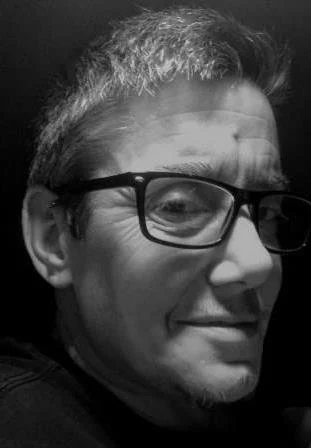
A couple months ago, Tony started a new writing group called Body Double for those who want to keep a monthly hand in their writing, but aren’t up to a weekly commitment yet. It’s two prompts, no feedback, just a shared writing room. People find it extremely helpful to sit in community even working on their own material. It meets Thursday nights once a month. If you’re intrigued, write to him here.
Falling into editing and planning for a whole new series, editing the final book of another, and various future writing projects, Tony and I are all over the map when it comes to literary conversations and me. It’s a blast. He meets me right where I am as an author. As a result, I cannot recommend him enough. If you’ve got a book cooking for 2026, I know a guy who is an immeasurable help.
Seriously, this is the guy. He’s edited my books for more than 20 years, so I ought to know. Find him here. Oh, and here’s his substack Subscribe here.
&

Right now I’m reading: A Brief History of the Female Body: An Evolutionary Look at How and Why the Female Form Came to Be by Dr. Deena Emera
Here’s what the blurb says:
What if the most frustrating parts of the female body—period pain, pregnancy risks, menopause—weren't flaws, but features shaped by evolution?
In A Brief History of the Female Body, evolutionary biologist and mother of four Dr. Deena Emera blends groundbreaking science with personal insight to explain how evolution shaped the female body—and why it matters today.
Inside, readers will discover:
Why menstruation, morning sickness, and menopause exist—and the evolutionary logic behind them
How traits often seen as inconvenient or flawed are actually adaptive survival mechanisms
The hidden biological trade-offs in pregnancy, childbirth, and female aging
Accessible, stigma-free explanations of complex reproductive science
Insights that empower women to better understand and advocate for their health
Praised as "eye-opening," "life-affirming," and "a must-read for every woman and those who love her," it's more than just a biology book—it's a guide to reclaiming ownership of the female body's story.
Being a medical intuitive, I tend to look at bodies as maps—outer manifestations of inner territories that are more than willing to yield up their secrets when we know how to read them. I believe it takes a lifetime to learn to read one’s own body. In this guide for half the species, some of how things came to be the way they are reveal helpful clues of evolution, which is still going on today.
&
Are you waiting for a sign?
How about this one?
Of a finished Wordle.
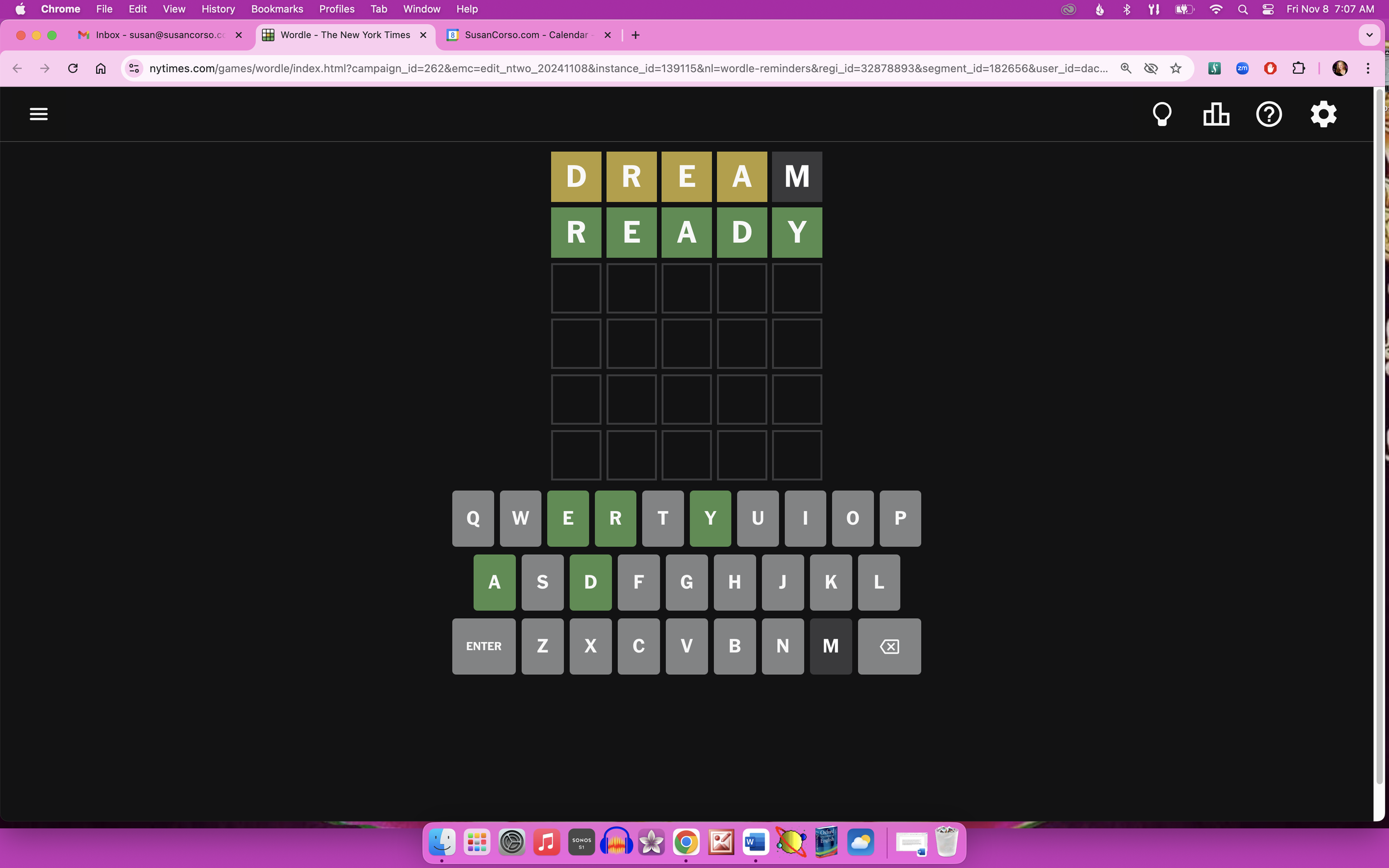
How do you suppose your life
might be different
if you actually thought your
best dream was ready?
What if it is?
Would that change how you
thought about yourself?
About others?
About the world?
Would it change how you behave?
Would it change your beliefs
about yourself?
What would you do differently
from how you do your life now?
Can you do it for one whole day?
Go for it.
&
I am, without doubt, certain that And is the secret to all we desire.
Let’s commit to practicing And ever more diligently, shall we?
Until next time,
Be Ampersand