
Ampersand Gazette #116
Welcome to the Ampersand Gazette, a metaphysical take on some of the news of the day. If you know others like us, who want to create a world that includes and works for everyone, please feel free to share this newsletter. The sign-up is here. And now, on with the latest …
&&&&
The Return of Blaming and Shaming in Public Health

In an interview last year, Robert F. Kennedy Jr., the health secretary, offered a little parable about American sickness. “If you want to eat doughnuts all day or drink sodas, that’s your choice,” Mr. Kennedy said.
This suggests that the turn toward destigmatization has provoked its own backlash—a belief that compassion has become coddling and that structural explanations—food deserts, for example—have crowded out personal responsibility.
At the center is an old assumption: Stigma, however harsh, is a form of medicine. Is it?
In 1963, sociologist Erving Goffman put forward one of the most influential definitions of stigma. He called it a mark of social disgrace. Stigma begins when some difference is labeled and loaded with stereotypes, eventually hardening into a distinction between “us” and “them.” The result can’t just be hurt feelings; stigma, by definition, must lead to status loss and discrimination. In other words, stigma is an exercise of power.
Tobacco was ultimately a blurry lesson about the efficacy of stigma, but AIDS made the dangers far harder to mistake. A mysterious, often fatal disease was spreading through sex, blood and needles—particularly among gay men and people who used drugs—and Americans needed to know the risks.
In many cases, public health turned this truth into images of contamination, intensifying the marginalization of already vulnerable groups. People with AIDS were abandoned by families, fired from jobs, refused medical care and, in many states, criminalized for having this disease. By the late 1980s, about half of Americans believed people with AIDS were to blame for their own illness, and many thought the disease was “God’s punishment.”
Stigma wasn’t containing the epidemic, though, only helping to conceal it. Public health campaigns that tried to bring risk into the open taught people to go underground instead. By the end of the 20th century, stigma had become a problem to eliminate, rather than a tool to deploy.
Dr. Puhl argues for a framework of “constructive responsibility,” which acknowledges that individuals do have responsibilities but insists that industries, policies, and environments must also be held accountable. That way, the “burden of sole responsibility” does not fall on the individual. Constructive responsibility does not discount the importance of choice, but rather recognizes that choices are made within systems that either support or impede change.
When anti-stigma interventions treat prejudice as a personal defect rather than a social pattern, invoking guilt or shame, they can backfire, increasing bias compared with doing nothing at all. Public health has long struggled to navigate between undermining people’s agency and shaming them for failing to overcome rigged conditions.
Excerpted from an essay by Simar Bajaj in The New York Times
“The Return of Blaming and Shaming in Public Health”
June 1, 2026
I fell over this blame/shame continuum unwittingly during one of my sojourns in the hospital this past year. In rapid succession, three different doctors “came out” to me as having diabetes. Not one of them offered a shred of shame or blame.
Freeze-frame.
It’s been 38 years since I got gestational diabetes, which, because of how the doctors treated it, not because it was a guarantee, turned into full-blown Type II. Blame and shame were totally the name of the game. In fact, severe shaming.
Recently, I visited a doctor’s office, and the med tech started our interaction with, “So, you’re a diabetic.” I didn’t say what I wanted to say, which was, “Would you say to someone with leukemia, ‘So you’re a leukemic?’” She would not.
What’s the difference between the two? Both are diseases. Both require treatment. The difference is … like with HIV/AIDS, like with alcoholism, like with drug use, there is an implicit judgment at the core of the question she asked.
That judgment is … if you’d only … been someone different, done something different, thought something different, prayed something different, you wouldn’t be saddled with what I have come to call “diseases of will.” Implicit is I could have done something to prevent it.
None of the three doctors had any of that. I was suffering stigma, a mark of disgrace. It’s even coded into the Christian Scriptures: Who sinned this man or his parents that he was born blind? The Nazarene rabbi answers: No one.
I’ve spent a lot of years working with that stigma, and it’s still in place, deeply embedded in my psyche because of the vulnerability I was experiencing when it first happened. I will get through it, and heal it, I’m sure, but the process isn’t fun.
The truth is, this boils down to Nature and Nurture, to which there has been the relatively recent addition, Neighborhood. All things, diseases included, occur in a context. All. No exceptions. To leave the context out is to slather the individual with blame and shame, leaving no way to escape them.
So the real answer to that med tech is, “No, I have diabetes. I’m not a diabetic. I, a person, of body, heart, mind, spirit, am so much more than a diagnosis, and I’ll thank you to both recognize and honor that despite your judgments and opinions.”
Is there a blame/shame ouch in your psyche? Speak back to those who would judge you, Belovèd. It changes everything.
&
“The problem with needing to fix your glasses,
once you reach a certain age, is that. … you
need your glasses to fix your glasses.”
Dr. Susan Corso
The Question:
How can I age gracefully?
&mpersand Answers:
Lord have mercy! You should have seen me with that tiny screwdriver, attempting to fix the dangling earpiece of my favorite granny glasses. I finally had to hold a magnifying glass in one hand, wedge the glasses between my desk and my lap, pray that they stayed put, and use the other for the miniature screwdriver. Hilarious.
I did, however, fix them. And it took longer than, in my not-so-humble opinion, it should have, but so what? I wanted my glasses fixed. They’re fixed. Who cares how long it took?
I believe that aging gracefully is an art. One of the major keys to it is aging gratefully. Yes, changing just one letter in a word changes everything.
Age, like time, is a construct, meant for our convenience, not our eternal damnation. For heaven’s sake, lighten up. We’re all getting older every day. Even two-year-olds. The thing that gets me out of the age doldrums almost instantly is gratitude. For real.
At least I had a magnifying glass. And a tiny screwdriver. And I hadn’t lost the screw. And I had noticed in time to do the delicate surgery. And I had granny glasses to begin with. Do you see?
Graceful is a natural by-product of grateful.
I even used the situation for an Ampersand Answers! And it made me laugh. C’mon, it’s true. I needed my glasses to fix my glasses.
It’s hard to be grateful and cop an attitude at the same time. In fact, I’d venture to say it’s impossible, and on those days that your age grabs you by the throat and scares the bejesus out of you, remember that you’re still here, you’re still alive, you’re still getting better, and find something, anything, to laugh about.
&
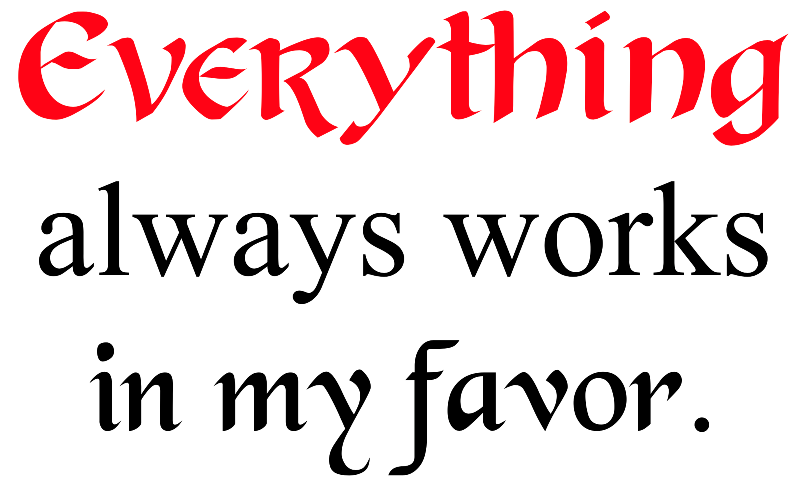
Here’s a universal affirmation. It works every time, for everyone, always and forever …
&


Today I’m the happiest girl in the whole USA, to cop a phrase. I got totally cleared by the surgeon yesterday, so I get to get back on my exercise bike, and am I chuffed. Lordy, six weeks of inactivity, and I am as weak as a kitten. Seriously. I’m starting with 10 minutes and building up to my half hour daily.
Still, there are silver linings in everything. I certainly hadn’t intended this when we took off for Albany, but I’d had a really good night’s sleep, and wakened really early, so I’d written a thousand words of Betrayed by the time we were ready to go. I had to give away some of the plot to my editor, but we spent the whole trip north figuring out a really delicate part of the world of Betrayed, which will have an effect on the rest of the books.
I realized why I’m on such a slow start for Prismatica, and it’s because in a series of eight or nine books, I cannot get the world-building wrong. So my writing process has mirrored my healing process—isn’t that just a lovely symmetry?
This morning, based upon what we discussed in the car, I got up and created a character chart which was rapidly becoming vital. Taking my time is exactly the right way to do this one.
Still no Yes on Mex yet, but it’s coming. Basically, I have to get the rhythm of Betrayed settled in my body, which as you know from the paragraph above has been a slow process, and then Spirit will give the go-ahead for the eleventh Mex Mystery. It’s called Shrew This! and it takes place during the Covid-19 shutdown. Anchored in an all-female production of Taming of the Shrew presented by the residents of a safe-house shelter, it addresses intimate partner violence. The spiritual healing modality is the use of mandala.
I know this is about to happen because every night-dream I have had lately includes a mandala.
&
Please make this indie author happy. Choose one of my series, and read all of them. Then review all of them. That’s the way others find books.
The entire series of The Mex Mysteries, all eleven of them, is one option. Or you could choose The Subversive Lovelies. Or, you could start The Boots & Boas Butch-Femme Romances …

There are eleven and counting …
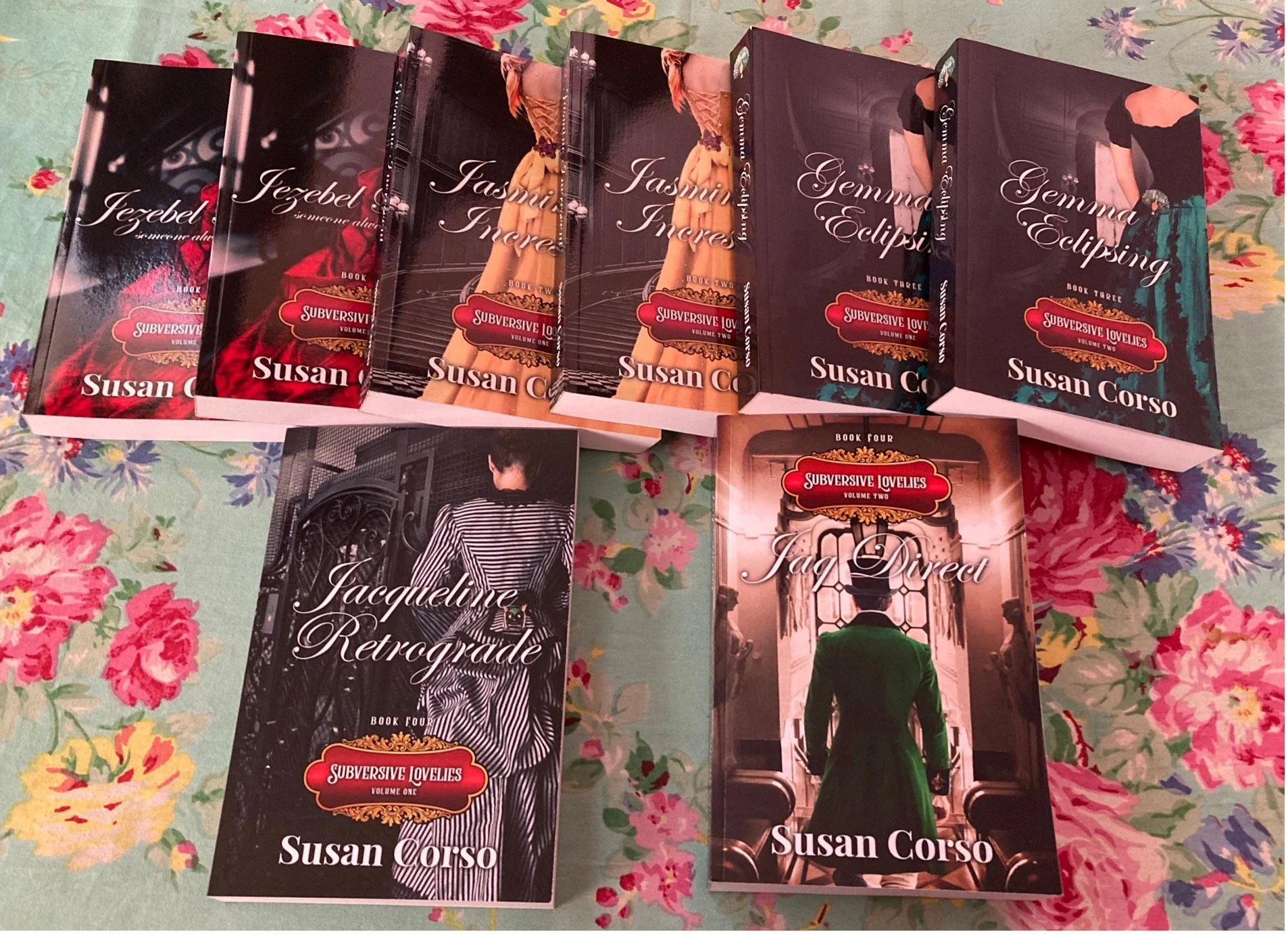
There are four in the completed series.
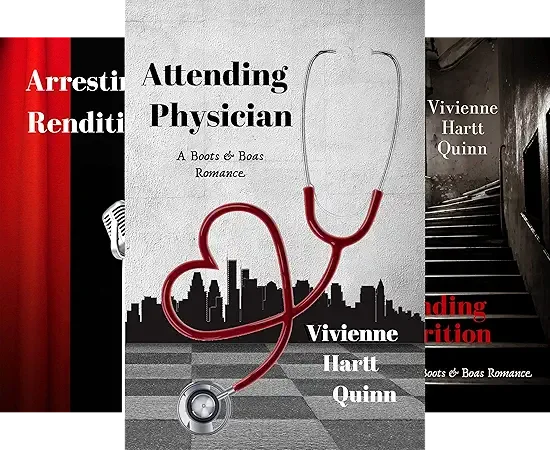
There are five and counting …

&
Steadfast. That’s the word that best describes Tony Amato and his work with, and loyalty to, his writing clients. Take it from someone who knows … both personal dedication (the man has taken care of me in the healthcare year from hell) and professional dedication (he’s edited my books for more than 20 years.) This is the guy.
His one-on-one work is unsurpassed. His workshops make a space for writers who have a hard time finding time for their art. He’s doing a new Crit Group for authors mid-stream in their process. He has two groups of ongoing work-shoppers who visit once a week via Zoom as an investment in their own writing chops, and he does a once a month, toe-in-the-water group called Body Double. Summer’s a great time to invest in your dreams of writing.
Tony Amato is a full service, one-stop shop. Find this genius—yes, I’m saying it, who has been nurturing authors for more than thirty years, here.

&
I’m down to the last series I plan to re-read unless something changes my mind. These are my favorite of all the vampire popcorn I’ve read. Consider The Last Vampire by R. A. Steffan and Jaelynn Woolf. Here’s some of the blurb for the first one of six:
“There’s a smokin’ hot dead guy locked in my garden shed. That part’s bad enough. But now, he’s trying to get out.
Growing up, my father always told me that I’d come to a bad end, just like my mom did when I was a kid. Hearing that kind of stuff when you’re little eventually gets to a girl, but I can’t say I ever expected my ‘bad end’ to involve an angry vampire with a severe case of iron deficiency and a panty-melting English accent.
Maybe I shouldn’t be surprised. Ever since my mother was assassinated, I’ve felt like there was something vast and frightening hidden beneath the fabric of the world. Something none of us are supposed to know about.
So far, finding out I was right hasn’t been nearly as satisfying as I’d hoped. I guess the trick will be staying alive long enough to shout ‘I told you so’ from the rooftops.
But before I can do that, I really need to figure out if the vampire who just bit me is one of the good guys or not.
* * *
The Last Vampire is a steamy urban fantasy romance series from USA Today Bestseller R. A. Steffan and Jaelynn Woolf, co-authors of the Circle of Blood saga.
Download Book One today, and enter a world shared by humans, fae, demons, and one very reluctant vampire. It’s a place where the supernatural threatens the mundane, nothing is as it seems, and love will either be the world’s downfall—or its salvation.”
These are fun, fast reads with a fascinating world structure. Can you imagine how it would feel to be the last of your kind? And not know why? Zorah, who learns she is part-demon, is a hoot. Ransley is, she’s right, a very hot vampire, and their chemistry is off the charts, not to mention the authors’ really good writing chops.
&
Are you waiting for a sign?
How about this one?

I tend to think of these images
as varying souls and spirits
encountering one another in the
daily round of life.
We are all discreet beings,
whole unto ourselves, of course,
but also social creatures,
meant to encounter, learn from,
grow with, and heal
ourselves and our compatriots.
Who have you encountered
lately who has changed you in some way?
A friend, a stranger, neither, or both.
One of the fastest ways to learn,
Belovèd, is to connect with others.
In fact, everything worthwhile in life,
including solitude,
happens in the context of others.
Spend a few minutes
remembering, and being
grateful for your contexts.
&
I am, without doubt, certain that And is the secret to all we desire.
Let’s commit to practicing And ever more diligently, shall we?
Until next time,
Be Ampersand