Ampersand Gazette #115
Welcome to the Ampersand Gazette, a metaphysical take on some of the news of the day. If you know others like us, who want to create a world that includes and works for everyone, please feel free to share this newsletter. The sign-up is here. And now, on with the latest …
&&&&
What A.I. Kant Do
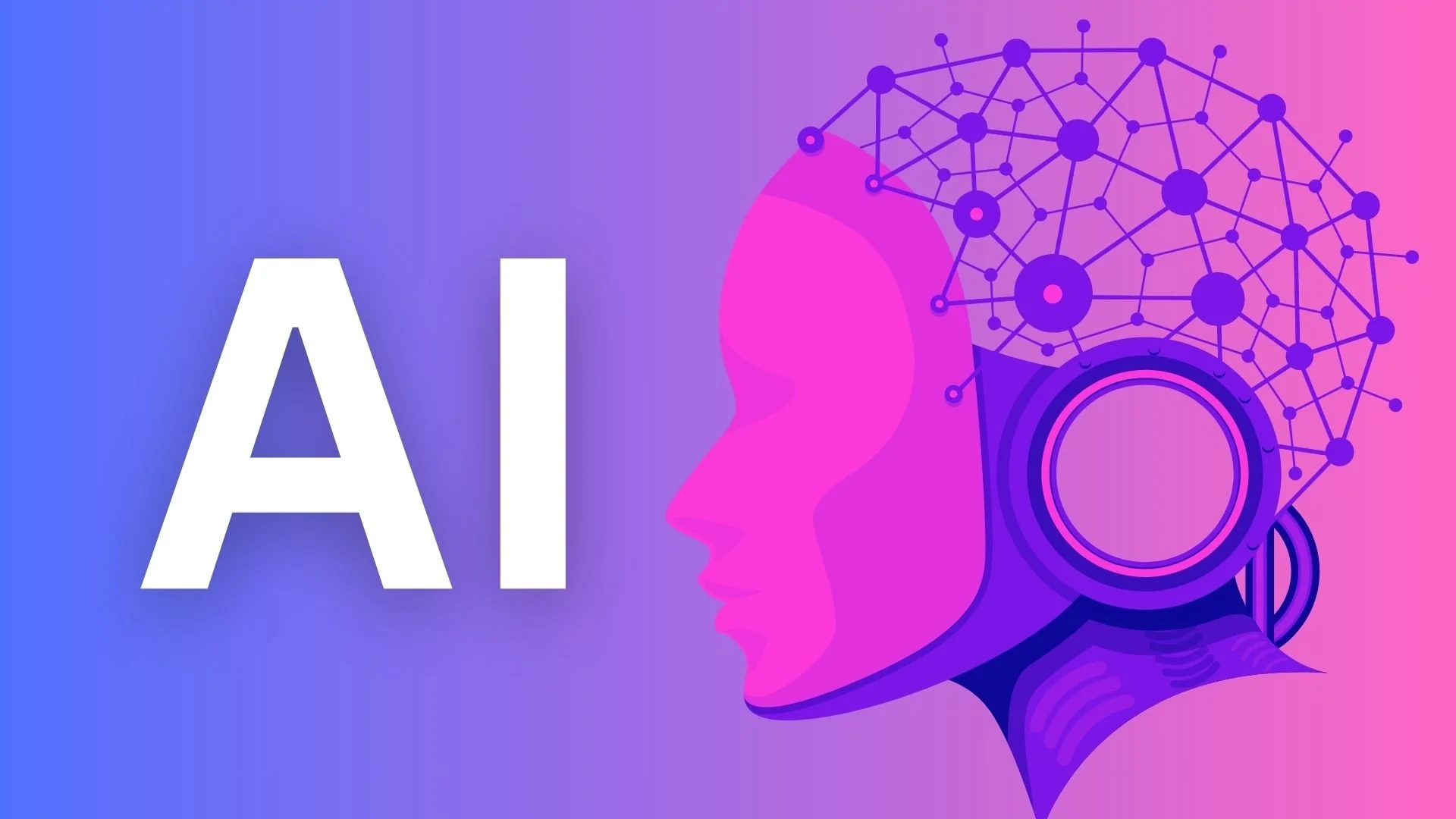
Humans may be on the way out. But at least the humanities are back. Or so some of the tech gods tell us.
After decades of dismissing liberal arts and humanities studies as useless and insisting that the mastery of science, engineering, math and tech is essential to future success, the tech world is coming around to the idea that learning about human nature could be a valuable asset in the coming A.I. revolution.
What A.I. can’t do—yet—is the stuff that makes us human: empathy, emotion, psychology, critical thinking. “What a piece of work is man,” Hamlet said, describing an intricate and infinite creature.
“I think A.I. is a false mirror,” said Drew Lichtenberg, the dramaturg at the Shakespeare Theatre Company here and a lecturer at Johns Hopkins University. “It reflects back answers to black-or-white questions, but it does little to help explain the human experience the way art or philosophy can.”
He was shocked that students last semester were hungry for difficult plays and philosophical readings with no clear answers. “They were particularly into Kant and his ‘Analytic of the Sublime,’ Nietzsche and existential nausea, Camus and the myth of Sisyphus,” he said, adding that the cool reason of A.I. comprehends, but the seething imagination of art apprehends.
Daniela Amodei, a founder of Anthropic, told ABC News that “the things that make us human will become much more important instead of much less important.” She said that at Anthropic, the company is looking to hire people who are “compassionate and curious” about other people.
“Studying the humanities is going to be more important than ever. But I think this idea that there are things that make us uniquely human—understanding ourselves, understanding history, understanding what makes us tick—I think that will always be really, really important.” Other billionaires and execs have warned of the need for emotional intelligence and storytelling in a world dominated by A.I.
“For students and parents, the best defense today is to be broadly educated so they can adapt to the changes coming. A.I. is better at rational thinking than it is at emotional depth. The last job that A.I. will get is stand-up comedian.”
Mark Cuban, an A.I. optimist who predicted a decade ago that English majors would have the edge in the future, told me: “A.I. is going to do a lot of amazing things. But, you know, humans are humans. Curiosity is the greatest skill you can have in an A.I. universe.”
Some people are beginning to realize you have to avoid sautéing your brain in A.I. slop if you want to keep it fit.
“The people who are reading hard books and are still writing have built these brain circuits, and they’re comfortable with cognitive strain,” said Cal Newport, a Georgetown University computer science professor. “These are the people with real value if everyone else has fried their brains.”
“There is a huge difference between knowledge and information, and these asinine people have taught our population that all of knowledge can be reduced to the status of information,” another said. “Press a button, you got your answer. So the whole humanistic mentality of mystery, obscurity, patience, beauty—it’s the opposite of what this technology has inculcated.”
Excerpted from an Opinion Essay by Maureen Dowd in The New York Times
“What A.I. Kant Do”
May 16, 2026
Maureen Dowd is my favorite Op-Ed—I know we’re not supposed to call it that anymore; it’s too complicated, and that from people who speak Emoji—writer. She’s observant, snide, literary and down to earth all at the same time. That’s why I liked what she has to say about AI.
As I said in the last issue, many of the people I know who jumped on the AI bandwagon have chosen their moments, and for the most part, jumped off. They’ve discovered that false mirror. I wouldn’t call it a false mirror; instead, I’ll offer: fun-house mirror, you know, the kind that distorts. Authors are offended at the slop on Amazon that’s AI generated. Professors work hard to figure out how to prevent their students from using it. Even tech folks are getting more into the wading pools than the deep ends.
Why? Because AI turns us even more into mere consumers who are rabid for content. Give me substance, literature, ideas, complex sentences, hell, dead-tree books over content any day.
Have you ever noticed that almost all content is presented in sans serif type? Do you know why? In the world of typographers, san serif type indicates text that wants to be skimmed, to be read quickly, no depth here, and moved on from. Serif type, on the other hand, is for lingering with words, daydreaming with them, tasting them, deciding whether it’s a word you want for your own. Serifs, those little curlicues, slow the eyes—they’re the delightful little culprits that take you, the reader, from comprehension to apprehension, or, grasping together to toward laying hold of.
I missed a word in an impromptu spelling bee once—chamois—some sort of soft cloth for polishing chrome in particular. I also missed grandeur in another bee. These became words I know, words I use, words I treasure.
The next time AI and its proponents start to spook you, just do it. Get out a favorite word and bask in it—bask is even one of those words—twilight, indigo, treasure, surprise, cherish, yum. These are everyday words to be sure, but they’re not words that belong with AI. No, these words, like curiouser, and fecund, and snuggle belong to humans not to users.
Sure, using can be a fast track, I’ll give you that, but it can also mean you miss an awful lot. This week, Belovèd, spend some time wallowing with your favorite words. You’ll be glad you did.
&
At least once in your life, doubt all things.
René Descartes, 18th c. philosopher
Cited in Surviving AIDS by Michael Callen
The Question:
How can I use doubt in a positive way?
&mpersand Answers:
Mine isn’t a particularly positive stance on doubt, but before you dismiss it out of hand, hear me out.
When did we decide that doubt was taboo? Did you get the memo? I didn’t.
The Latin roots of doubt mean to hesitate. What’s wrong with hesitation?
So the first part of my answer is … when doubt shows up pay attention, not because you wish to obliterate it, but because you wish to hear its message.
There are choices in life, and then there are decisions. Turkey or Roast Beef is not likely to have an earthshattering effect on a life, but shall I marry her or shan’t I, definitely will.
I prefer to think of that hesitation as a blessing. It says, Wait, think, get quiet, get still, find a trusted advisor, make a list of pros and cons, or flip a coin, however you make big choices, but don’t ignore it or try to squelch it.
That doubt has a message that pertains to you, and your situation. We ignore doubt at our own peril. Instead, make a space, sit with doubt, befriend it. Usually doubt is trying to get your attention onto a particular consequence, but only if you’ll hang with it for a bit.
If you’ve gotten into the habit of habitual doubting, borrow a bit of wisdom from Cher, yes, that Cher: “Is it going to matter in five minutes, five hours, five days, five weeks, five months, five years?” If it is, you have your work cut out for you. If it isn’t, life’s short, have the peanut butter and jelly.
&
Here’s a universal affirmation. It works every time, for everyone, always and forever …
&

Wow, best laid plans. Ever since my surgery on April 20, I’ve been sailing along, doing great, no pain, no bleeding. Everything a-okay, but then I crashed, but crashed. I mean more than a plot twist—a plot toss-it-out-and-start-over. I spent four days in bed, sleeping and reading. I quit writing—no steam. In fact, those two words best describe what’s happened: no steam. I tanked, and why not, after more than a year of going from one medical issue to the next one, which are still not completely done.
Still, I have started Betrayed. And I will go back to it, once I get my oomph back. I think this is the first time in my life that I ever just stopped to do nothing. Seriously. I’m re-reading, see below, and going very slowly, taking my time, doing one thing at a time, one foot in front of the other, and am recently very fond of naps, no matter what time of day. As I rest, part of me is immersed in 1983, the year in which Betrayed is set, and I can already see evidence that I’m falling over tidbits that will go to make the book that much more authentic.
I’m still waiting for the light to turn green on writing two books at the same time. I think it’s around the corner. Basically, I have to get the rhythm of Betrayed settled in my body, which as you know from the paragraph above has been delayed, and then Spirit will give the go-ahead for the eleventh Mex Mystery. It’s called Shrew This! and it takes place during the Covid-19 shutdown. Anchored in an all-female production of Taming of the Shrew presented by the residents of a safe-house shelter, it addresses intimate partner violence. The spiritual healing modality is the use of mandala.
I know this is about to happen because every night-dream I have had lately includes a mandala.
&
Please make this indie author happy. Choose one of my series, and read all of them. Then review all of them. That’s the way others find books.
The entire series of The Subversive Lovelies is one option, or how about The Mex Mysteries—all eleven of them. Fall into the stories of a high femme intuitive investigator that definitely has her own way of being in this crazy world we live in.


&
Special Request:
Send me your spiritual questions please. As of now, which I’m sure you’ve noticed, I’m posting &mpersand Answers twice a week.
&
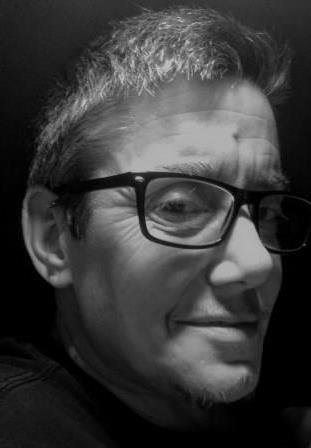
Take it from someone who knows … Tony Amato is dedicated to the authors he serves—whether it’s editing a piece to be read aloud at the last minute, or doing a slash and burn edit for a big publishing house, or coaxing a young writer in finding their authentic writing voice—he’s with them a hundred and fifty percent.
He’s also with those of us who are more experienced as writers. His workshops make a space for writers who have a hard time finding time for their art. He’s doing a new Crit Group for authors mid-stream in their process. He has two groups of ongoing work-shoppers who visit once a week via Zoom as an investment in their own writing chops, and he does a once a month, toe-in-the-water group called Body Double. Summer’s a great time to invest in your dreams of writing.
Tony Amato is a full service, one-stop shop. Find this genius—yes, I’m saying it, who has been nurturing authors for more than thirty years, here.
&
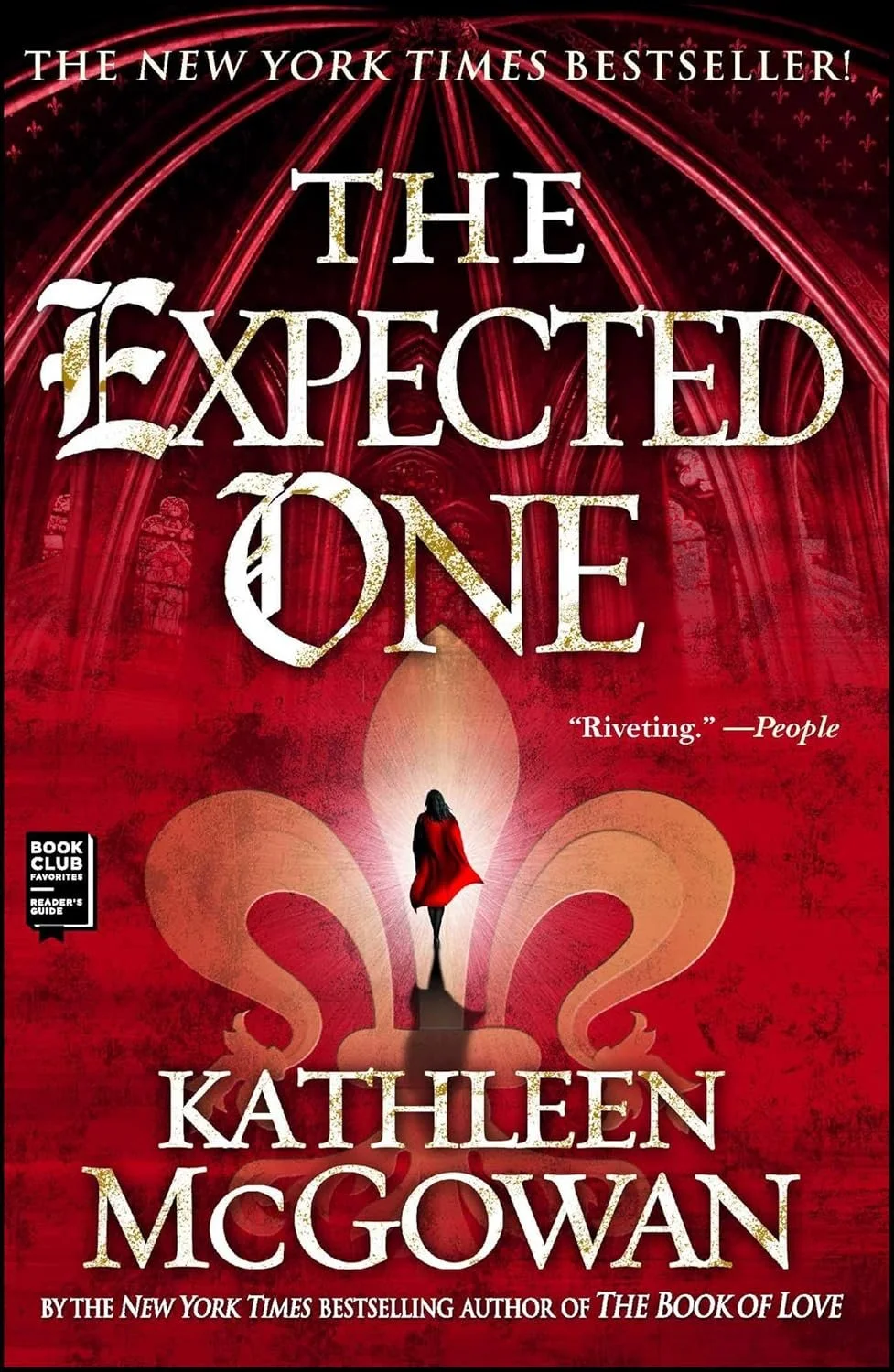
Mind, I’m still re-reading, but at least this time, I can recommend the first book of a trilogy on Mary Magdalene. Those of you who are familiar with my work know that I have studied The Magdalene, or, as we know her in my house, Mary Mags, for years and years. I think I’ve read almost everything in English on her.
I’ve just finished the first book of The Magdalene Line Trilogy by Kathleen McGowan called The Expected One. Here’s what the blurb has to say:
“A gripping thriller and a profound spiritual journey that reveals the greatest story never told!
Two thousand years ago, Mary Magdalene hid a set of scrolls in the rocky foothills of the French Pyrenees, a gospel that contained her own version of the events and characters of the New Testament. Protected by supernatural forces, these sacred scrolls could be uncovered only by a special seeker, one who fulfills the ancient prophecy of l'attendue—The Expected One.
When journalist Maureen Paschal begins the research for a new book, she has no idea that she is stepping into an ancient mystery so secret, so revolutionary, that thousands of people have killed and died for it. She becomes deeply immersed in the mystical cultures of southwest France as the eerie prophecy of The Expected One casts a shadow over her life and work and a long-buried family secret comes to light. Ultimately she comes face-to-face with Jesus Christ, Mary Magdalene, John the Baptist, Judas, and Salomé in the pages of a deeply moving and powerful new gospel, the life of Jesus as told by Mary Magdalene.”
So, between us, I don’t think it’s a gripping thriller, but it is a profound spiritual journey. She’s not the best writer who ever lived—I’d rate her book two steps above The Celestine Prophecy, and three below Dan Brown. Still, the story—no, the alternative story of Mary Mags is riveting. The possibility that she and Jesus were married makes a whole lot of sense. That She would have been persecuted after He died makes even more sense.
&
Are you waiting for a sign?
How about this one?
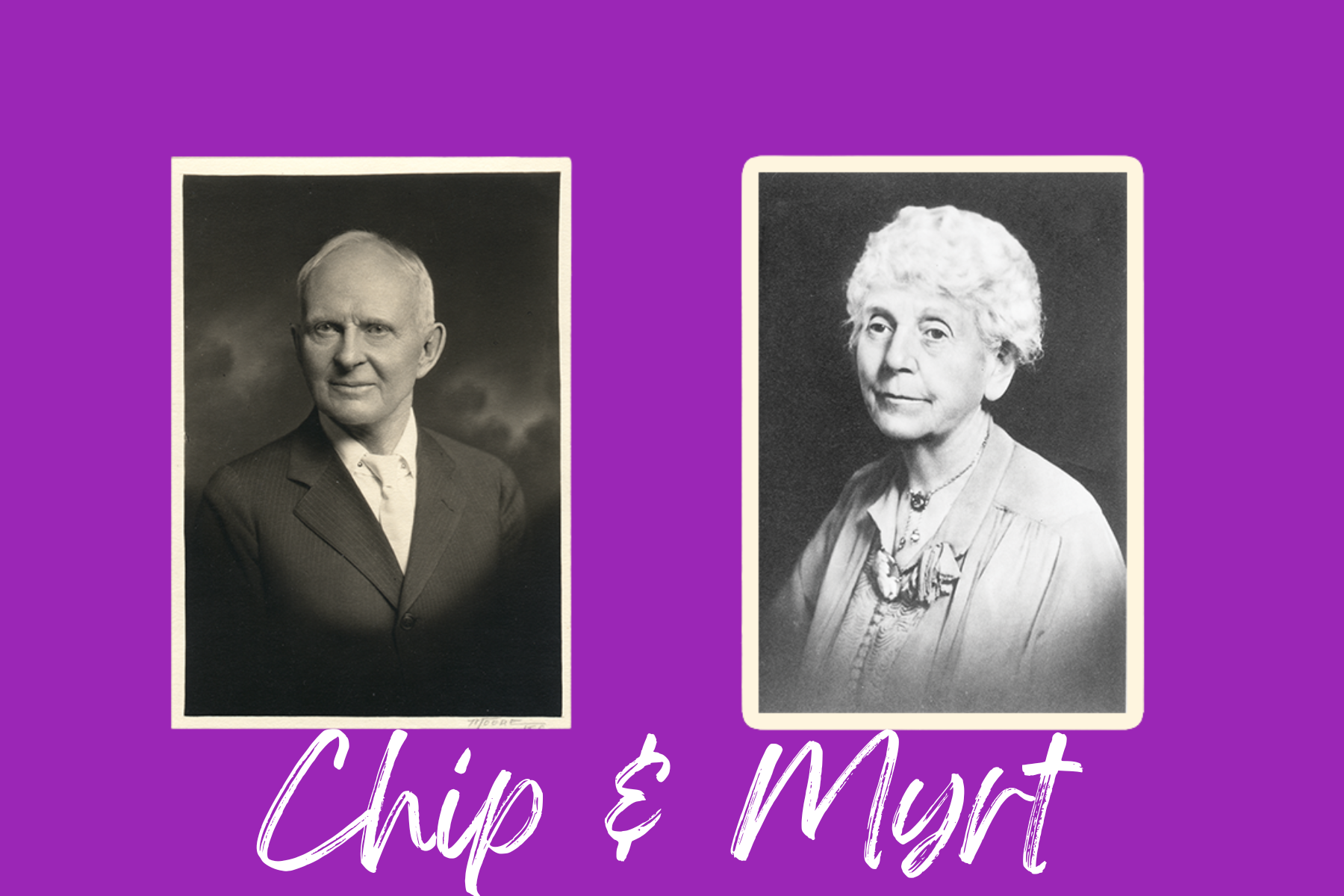
It will not surprise you
that I created this image.
The two people
depicted here are
Charles, facetiously Chip,
and
Myrtle, facetiously Myrt,
Fillmore,
the two extraordinary souls
who founded
Unity Village
in Lee’s Summit, Missouri.
They were renowned for their
scholarship, their healing ministries,
their prodigious writing, and for prayer,
always prayer.
Now, I don’t know about you,
but for me, sometimes I need a face
for the Divine,
especially when I’m struggling
with something.
Then I can get down and dirty
with Chip and Myrt.
“Hey,” I holler. “Are you
paying attention here?
Are you helping me?
I need it right now.”
And, you know what?
Sometimes I feel like Chip is
standing behind me,
and Myrt is sitting with me
holding my hand,
and then I do feel helped
and not so alone.
Chip and Myrt might not be your
go-to in a case like this, but
it’s good to know who is.
A guardian angel?
A spirit guide?
An ancestor?
Someone/thing completely other?
We are all always in all ways
helped beyond our wildest dreams.
Promise.
&
I am, without doubt, certain that And is the secret to all we desire.
Let’s commit to practicing And ever more diligently, shall we?
Until next time,
Be Ampersand