
Ampersand Gazette #113
Welcome to the Ampersand Gazette, a metaphysical take on some of the news of the day. If you know others like us, who want to create a world that includes and works for everyone, please feel free to share this newsletter. The sign-up is here. And now, on with the latest …
&&&&
Want to Change?
Maybe Stop Trying So Hard.

The message that we should improve ourselves is constant and seductive, delivered by self-described “change agents” of our booming transformation economy. But after decades of working to change myself, I’ve come to believe that the “self” in self-transformation is only half the story. Change is less about willpower than we imagine, more shaped by other people than we admit, and far more mysterious than the self-improvement industry can afford to sit with.
Cantankerous psychiatrist Fritz Perls saw our grasping for inner change as a kind of self-deception. He said the same about trying to change others. Long before “let them theory” was a viral sensation, he advocated a kind of psychological libertarianism. “I am not in this world to live up to your expectations, and you are not in this world to live up to mine,” he wrote in what he dubbed the Gestalt Prayer.
Instead of connecting with our bodies and staying with our experience, we try to fix or outrun ourselves—tweaking, upgrading, searching for salvation in metrics. He’s right about one thing: Real change is paradoxical, and trying too hard to control the process can get in the way.
What works better is creating the right conditions—feeling seen and valued without being shielded from discomfort, and being in the presence of people and settings that draw out curiosity and awe.
In a group I observed, a psychologist told his patients that change requires a confounding mix of intention and something like Buddhist surrender—effort without control. Change also has to register socially: To survive in the world, he said, his patients would have to find a way to be perceived differently. In other words, we might think of self-transformation as a team sport.
Only in the past 75 years did psychology and self-help culture elevate authenticity and self-direction into a cultural ideal, teaching us that change must come from within. And only in the last decade or so has the range of what we might change into come to resemble an algorithm’s infinite scroll.
In our time of cultural and technological churn, when everything seems to be changing both too fast and not nearly enough, remaking the self can feel like one of the few forms of agency left. The problem is that we’re almost comically unreliable narrators. We imagine we’re changing when we aren’t and fail to recognize it when we are. It’s not just that we misread how we change; it’s that much of our own change is hidden from us.
So, should we throw up our hands and give up? The paradox is that effort matters, but it works best when paired with a bracing dose of humility. Ideally, we work on ourselves, cultivate better conditions, seek wiser company—and in the process discover, as Dr. Viktor Frankl did, that we change partly by loosening our fixation on ourselves. When “we love other persons or serve causes other than ourselves,” he said in a 1975 lecture, “we actualize ourselves by way of a side effect.”
Our beliefs about change could use a revision. Too much wanting can backfire.
Excerpted from an essay by Benoit Denizet-Lewis in The New York Times
“Want to Change? Maybe Stop Trying So Hard.”
April 5, 2026
I remember clearly the day I realized that I’d spent a solid more-than-twenty years misunderstanding the 23rd Psalm. Because of my theatre training, I had become in-demand as a Scripture reader for various congregations nearby, and that Sunday, I’d read aloud Psalm 23.
I always read from the King James Version—mostly because it’s Shakespearean English, and I like the recognizability it enjoys in the ears of most folks. I also had been reminded numerous times by various well-meaning souls that reading that particular scripture was, as a rule, a non-starter. It put people to sleep the moment the reader started because … everyone knew it. Fair enough.
So when I got up that morning, I was aware of an urgency to that morning’s reading that was usually not part of the process. I said, “The Lord is MY (yes, bold, italics, and all caps) shepherd, I shall not want,” and as far as I’m concerned the real reading ended there.
First, everyone woke up. Fast. Because I sounded like I meant I had a shepherd and they didn’t. I’d made it personal. But it wasn’t that line that so boggled me. It was the second one.
I’d thought I’d known its meaning for my whole life … I shall not want, namely, desire … things. It was wrong to want things. The most important things in life aren’t things, that whole illusory bag of tricks. That morning, though—I don’t know, maybe because everyone woke up at once when they wondered whether they had their own shepherds—I got the real meaning of that line:
I shall not lack.
Want was Shakespearean for lack. I shall never, ever lack for the things or people or places or circumstances I need. Ever. My needs are covered.
As Dr. Denizet-Lewis says, “Too much wanting can backfire.” So here’s a classic metaphysical teaching about want, Belovèd. When you speak a desire, and choose to say, “I want …” let’s just pick something, shall we? “… a new bicycle,” your subconscious mind knows only one word, that word being yes.
So it, doing what it is meant to do, agrees with you. Yes, you want a new bicycle. You see where I’m going? Staying with the wanting keeps you in want aka lack, if you’re in a Shakespearean frame of mind.
Instead, you could say, “I have a new bicycle.” Now, it may not yet be true factually, but it is true in your subconscious because it, honorable little being that it is, has again said yes. And then your subconscious reaches out to manifest you a new bicycle IRL, as the kids say.
Have a look ’round your recent creating language, Belovèd. If you find a lot of “I want,” change your mind and your words to “I have” and watch for bicycles.
&
Don’t try to measure your happiness
by someone else’s measuring stick.”
Emily Bex, The Medici Warriors
The Question:
How can I measure happiness?
&mpersand Answers:
Oooh. If ever there were written a prescription for misery, this is it. In fact, I’d say it’s the worst one of them all.
Many years ago, I knew a young actor doing everything he could to make it in New York on Broadway, when he called me one Saturday utterly bereft. He’d taken the train up to Connecticut, where he’d been raised, to spend it with his brother and parents, and their best friends and their two sons. It was an octet that was both familiar and fun.
Enter the eldest son of the parents’ best friends, who had chosen the career path of investment banking. The boy was making over a quarter million dollars a year, before bonuses, he had limo service and food service at his fingertips, he’d been married to his college sweetheart, who was a not-for-profit arts wonk, and they’d bought a multimillion dollar coop in Soho just before he started his job at the end of his first summer after college.
Well, the woe is I of my actor friend. I laughed and laughed and laughed, to the degree that I made him mad. When I finally calmed down, I told him what this &mpersand Answers says. Don’t try to measure your happiness with someone else’s measuring stick. He shot some well-deserved snarky sarcasm at me and got off the phone.
Now, it’s Sunday night. My little actor friend calls again. “Oh, my God,” he said, “my dad’s best friend’s son is totally miserable. He never sees his wife. He uses his gorgeous apartment as a place to shower and change his clothes. He’s exhausted. He’s run down. He doesn’t feel good most of the time. And he has no time to look for another job. The guy is so envious of me it dripped off him.”
I, wised up for that moment, said nothing.
Finally, he said, “Oh, I see. Other people’s measuring sticks.”
“Yeah,” I agreed. “Only you can determine what makes you happy, what constitutes success for you, whatever it is that you want for yourself and in your life. Only you are qualified.”
&
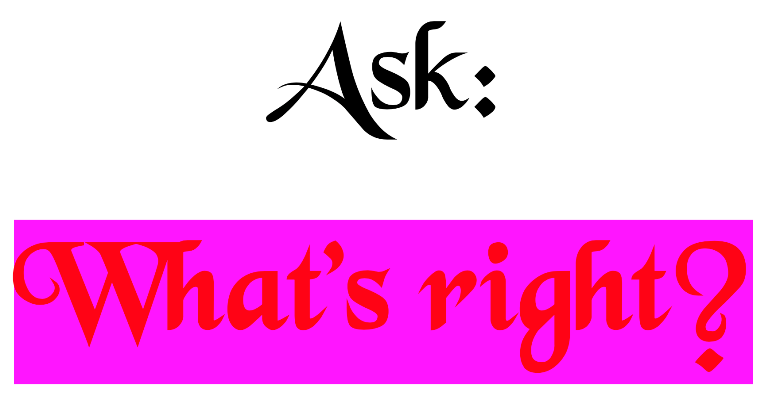
Here’s a universal affirmation. It works every time, for everyone, always and forever …
&

Since, post-surgery, I have a hard limit on what I’m allowed to lift, namely, five pounds, about all I can do is put the microphone in its stand. I’m that much closer to starting to read, which is about as taxing as it gets for me for the next six weeks.
I think I’ve decided I need to reread the whole book, as if I’m reading it for the first time, so I get a better sense of the rhythm of it versus its pesky little details. I’m still fixed on not the perfect of an audiobook, instead the imperfect of a bedtime story read aloud.
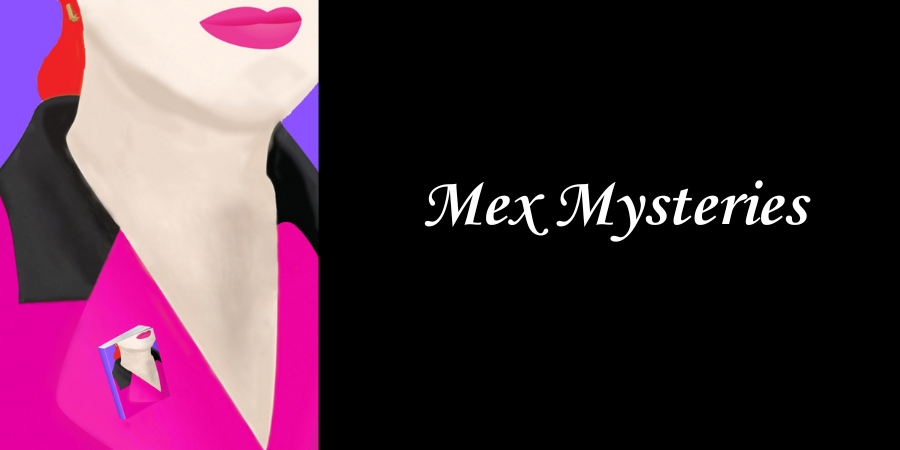
Writing two books at the same time is a hoot, a total adventure, especially as a discovery writer—a perfect way to recover from major surgery. Book 2 of Prismatica, as above, and the eleventh Mex Mystery. It’s called Shrew This! and it takes place during the Covid-19 shutdown. Anchored in an all-female production of Taming of the Shrew presented by the residents of a domestic safe-house shelter, it addresses intimate partner violence. The spiritual healing modality is the use of mandala.
Please make this indie author happy. Choose one of my series, and read all of them. Then review all of them. That’s the way others find books.

The entire series of The Subversive Lovelies is one option, or how about The Mex Mysteries—all eleven of them. Fall into the stories of a high femme intuitive investigator that definitely has her own way of being in this crazy world we live in.

&
Special Request:
Send me your spiritual questions please. As of now, which I’m sure you’ve noticed, I’m posting &mpersand Answers twice a week.
&

Despite having a considerable increase in wife duty, (and that just might be the understatement of the millennium, truly—he’s been a right hero for me every step of the way through this health saga for more than a year,) Tony Amato remains my absolute go-to for bookhusbanding of all kinds for all people. Seriously. When your wife isn’t allowed to bend or lift, life gets, um, interesting—well, on my side, annoying—but still he makes time and space to talk about my writing.
The space in which things happen needs to be safe, and held by a reliable sort. Enter Tony Amato, stage left. The gift of a writing wizard along for the ride—from tentative conception to holding a finished book in your hands—is inestimable. Is it time you invested in your writing?
Tony Amato is a full service, one-stop shop. He’s helped more LGBTQ+ authors, as well as others, get clear on the best way to tap into their creativity, discern their own processes, learn their craft, and come up with stellar projects. Find this genius—yes, I’m saying it, who has been nurturing authors for more than thirty years, here.
&
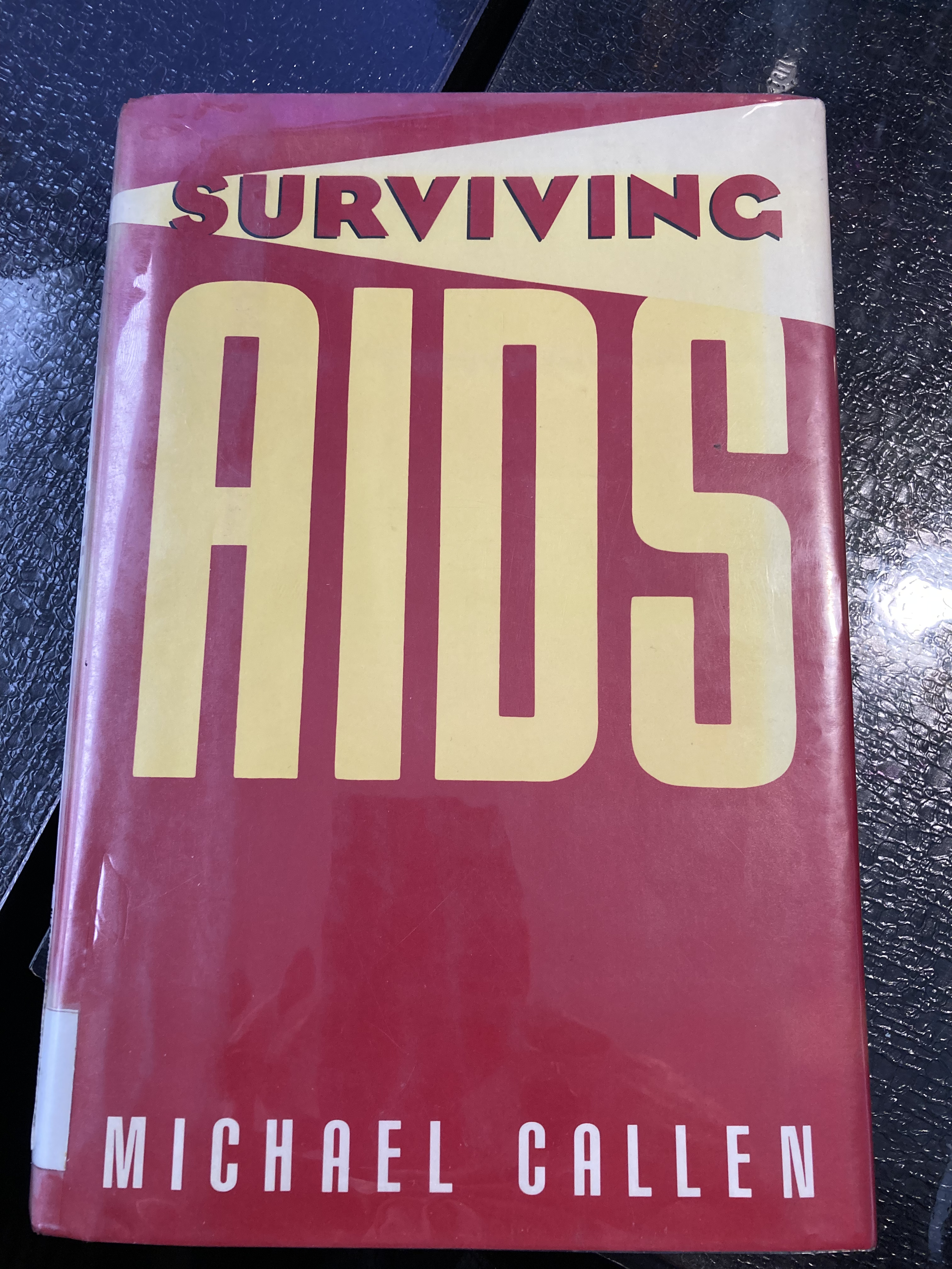
Surviving AIDS by Michael Callen, 1.1.1990
from the dust jacket …
In 1982, the year Michael Callen was diagnosed with AIDS, his prognosis was grim. Most doctors believed that no one survived AIDS for much longer than a year. But eight years later, Michael is one of hundreds of long-term survivors who are still alive and doing fine.
In fact, Michael is doing so fine that he’s testified before Congress, produced a record album, self-published a magazine, co-created People with AIDS Coalition (an organization that offers counseling, financial services, and social activities to those diagnosed with AIDS,) and co-founded the Community Research Initiative, a community-based organization that tests promising drugs to fight AIDS.
Probably the greatest myth about AIDS is that it’s always fatal, an automatic death sentence. With Surviving AIDS, Michael fights against the public ignorance and sloppy reporting that have created this damaging lie. He tells both his own story and, through in-depth interviews, the stories of thirteen other long-term survivors.
A profound and moving book, Surviving AIDS profiles men and women, gay, straight, and bisexual, black, white, and brown, each of whom is living a remarkable life. These are stories of their fighting spirit, their courage, their drama, and their sometimes outrageous sense of humor, and present their answers to the question: “Why am I alive?”
I read a lot of out-of-print books.* A lot. The reason is because a lot of my books take place not in current time, so I research like a fiend. Then I narrow down what I need to lend authenticity to the era in which I’ve placed my story.
Michael Callen is a hero. Whether you agree with his AIDS philosophy or not, he stood up for what he believed. He acted on it. He was articulate as all get-out. In the years during which he became a long-term survivor (meaning lived over three years with a certified diagnosis,) he did everything in his power, and used every resource he had, to help change the narrative of HIV/AIDS for all time.
*Abebooks.com is my go-to for used books; their service is great.
&
Are you waiting for a sign?
How about this one?

I loved these when I found them.
Ever wanted to be beamed up?
I sure have.
What if you can be?
Beamed up, that is?
Choose the best chakra light
for yourself right now,
and
just say the magic spell:
“Beam me up, Scottie,”
and you’re off across the galaxy
to wherever your heart desires.
Now give a gift to this new world
you’ve discovered,
and because energy balance
is a real thing,
bring one back to us here.
Thanks!
&
I am, without doubt, certain that And is the secret to all we desire.
Let’s commit to practicing And ever more diligently, shall we?
Until next time,
Be Ampersand