
Ampersand Gazette #110
Welcome to the Ampersand Gazette, a metaphysical take on some of the news of the day. If you know others like us, who want to create a world that includes and works for everyone, please feel free to share this newsletter. The sign-up is here. And now, on with the latest …
&&&&
What Can Musical Variations Teach Us About Creativity?

Several times during his hourlong performance of Beethoven’s “Diabelli Variations” at Carnegie Hall last month, the pianist Igor Levit made the same nonmusical gesture. At the end of a variation he would briskly swipe the flat of his hand horizontally above the keys as if clearing a whiteboard of the previous idea’s scribbles.
The motion seemed to be a mental reset—as if Levit were reminding himself to return to the blank slate of the theme, just as Beethoven had done, so as to ask the same question anew: What else might this music become? It was a reminder that variations are not merely a decorative form but also a kind of problem solving, in which each new section challenges the composer, the performer and the listener to approach the same material with a beginner’s mind.
This aspect of variations is the focus of a scientific article by Anthony Brandt, a composer and musicologist whose work focuses on music cognition. I spoke with Brandt about what this musical form can teach us about how human beings puzzle through open-ended problems.
You use the term ‘divergent thinking.’ How does that relate to creativity?
The greatest consensus around divergent thinking is that it’s the core of creativity: being able to proliferate options to an open-ended problem rather than seizing on the same solution over and over again.
It’s hard to imagine creativity without divergent thinking. How are you being exploratory? How are you being adventurous? A theme and variations is a very overt demonstration of that process, because the whole idea is to generate novel versions of the same source.
I sometimes think of it this way: Bach takes the same route to work every day, but what happens en route is astonishing. Beethoven keeps taking a different route to work. He’s going to the same place, but he never takes the same path.
Human beings have what’s called the serial-order effect: The longer we spend thinking about something, the wilder and more unusual our ideas tend to get.
I think time is one of our greatest allies in the creative process.
Excerpted from a New York Times article by Corinna da Fonseca-Wollheim
“What Can Musical Variations Teach Us About Creativity?”
February 16, 2026
When I was in seminary, I was accused of being a synthesist. I bore the label proudly. The professor who leveled it at me thought it, instead, a horror show.
Clearly, creativity was not something he valued. He valued dogma. Not I.
One of my favorite things to do in the whole world is to brainstorm ideas, the wilder and crazier the better. The more time a group spends tossing out more and more far out suggestions, the likelier it is that they will come up with something entirely new.
“Box?” I’ve been known to say. “What box?”
I don’t want to stay in the box. I never want the same old, same old. And I think, when truth is told, very few of us do.
One of the things that keeps humans engaged in life is creating new ideas, doing new things, dreaming of the impossible. But we have to dedicate time to creativity, and it’s a rare day indeed when we can schedule inspiration.
Inspiration actually comes from showing up. At the page. In front of the easel. At the piano. Anywhere and everywhere you are willing to show up—present, accounted for, attentive, awake. Vitally engaged.
That’s really what creativity does. It engages us. It gets us here, now. Participating. It’s not possible to be passive and creative at the same time. Creativity is active.
I truly believe that it’s creativity which is going to get us through the current presidency and all its horrific fall-out, and then it’s creativity that will devise magical solutions to repair all the damage that’s been done. Oh, and change a few signs.
Try it for a week on your way to work. Take the Beethoven Challenge. Get to work five different ways. See what that does to your commute.
And never forget that there is no such thing as someone who isn’t creative. We all are. It’s inherent, part of the factory-direct settings. Promise.
&
That love for one’s neighbor is the country’s most powerful tool
against the rise of authoritarianism.
Governor of Illinois J. B. Pritzker
in his State of the State Address
The Question:
How can I resist authoritarianism?
&mpersand Answers:
Resistance, as you already know, is a slippery slope. Mechanically speaking, the minute you resist anything, you draw it to you.
I’ll prove it: Whatever you do don’t think about the Statue of Liberty.
How long before she showed up? Nanoseconds, I’m sure.
Now, if you don’t believe me, try this: Whatever you do don’t think about the Statue of Liberty in a tutu.
See her? Dancing in a jewelry box? Sure you do.
So, to authoritarianism. It’s tempting to resist it. It is. I won’t deny that, but … the far stronger, longer-lasting, practical strategy is to encompass it, include it, put a metaphorical arm around its metaphorical shoulder and give it a hug.
Governor Pritzker has the right idea. The action you can take to “resist” authoritarianism is right where you are, with what you have—care for, dare I say it, love your neighbor.
You know that expression NIMBY? Not in my back yard.
Well, let’s obliterate that, shall we? Who lives close by? What do they need? Can you provide it? Wrapping an arm around and fulfilling the needs of those who are near, even if not dear, is the best resistance of authoritarianism I know.
&
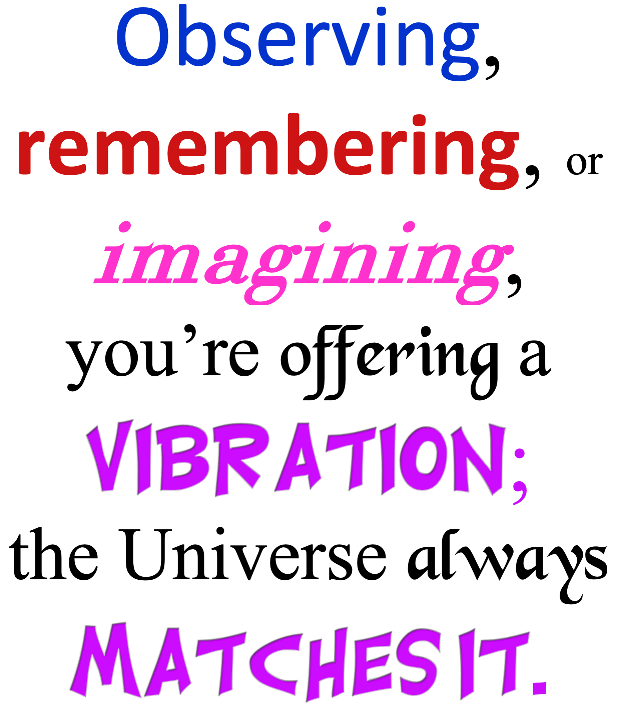
Here’s a universal affirmation. It works every time, for everyone, always and forever …
&

Okay, so I’m in world-building mode. How do I know? Because we read aloud all the scenes I hadn’t used yet. I know where a lot of them go.And now I have to decide some more of the rules of that literary world before I can write the next book in the series. So we’re having LOTS of conversations about characters—one particular group of them, and what they can and cannot do. What makes them special. How their gifts play out in the story. Et al, as the lawyers say.
It’s a heady time, world-building, and also a little intimidating. What if I miss something urgent? Well, I’ll go back and fix it then, won’t I?
I’m still thinking of starting this book off in a different way than I ever have before—on my YouTube Channel, reading a couple of chapters a week. No, not the perfect of an audiobook, instead the imperfect of a bedtime story read aloud.

Jaq Direct, Book Four, Volume Two for paper book readers, and Book 8 for e-readers is alive and well and PUBLISHED! For now, it is available on Amazon, and in the next few days, it will go up on Kobo and B & N.
It’s an amazing feeling to finish a series for the first time in almost thirty years of writing. It’s exciting, and sad at the same time. I’ll miss these folks. I’ll have to read my own books to visit with them again. No hardship there.
&
Please make this indie author happy. Choose one of my series, and read all of them. Then review all of them. That’s the way others find books.

&
Special Request:
Send me your spiritual questions please. As of now, which I’m sure you’ve noticed, I’m posting &mpersand Answers twice a week.
&

I cannot overstate the magic that resulted for The Subversive Lovelies because of conversations with this one man.
Tony Amato, yes, my lawfully wedded—but he wasn’t always—is a full service, one-stop shop. He’s helped more LGBTQ+ authors, as well as others, get clear on the best way to tap into their creativity, discern their own processes, learn their craft, and come up with stellar projects. Find this genius—yes, I’m saying it, who has been nurturing authors for more than thirty years, here.
Oh, and here’s his substack Subscribe here. Also, remember that the next Body Double, the once-a-month writing workshop he facilitates, is March 19th. Write to Tony here.
&
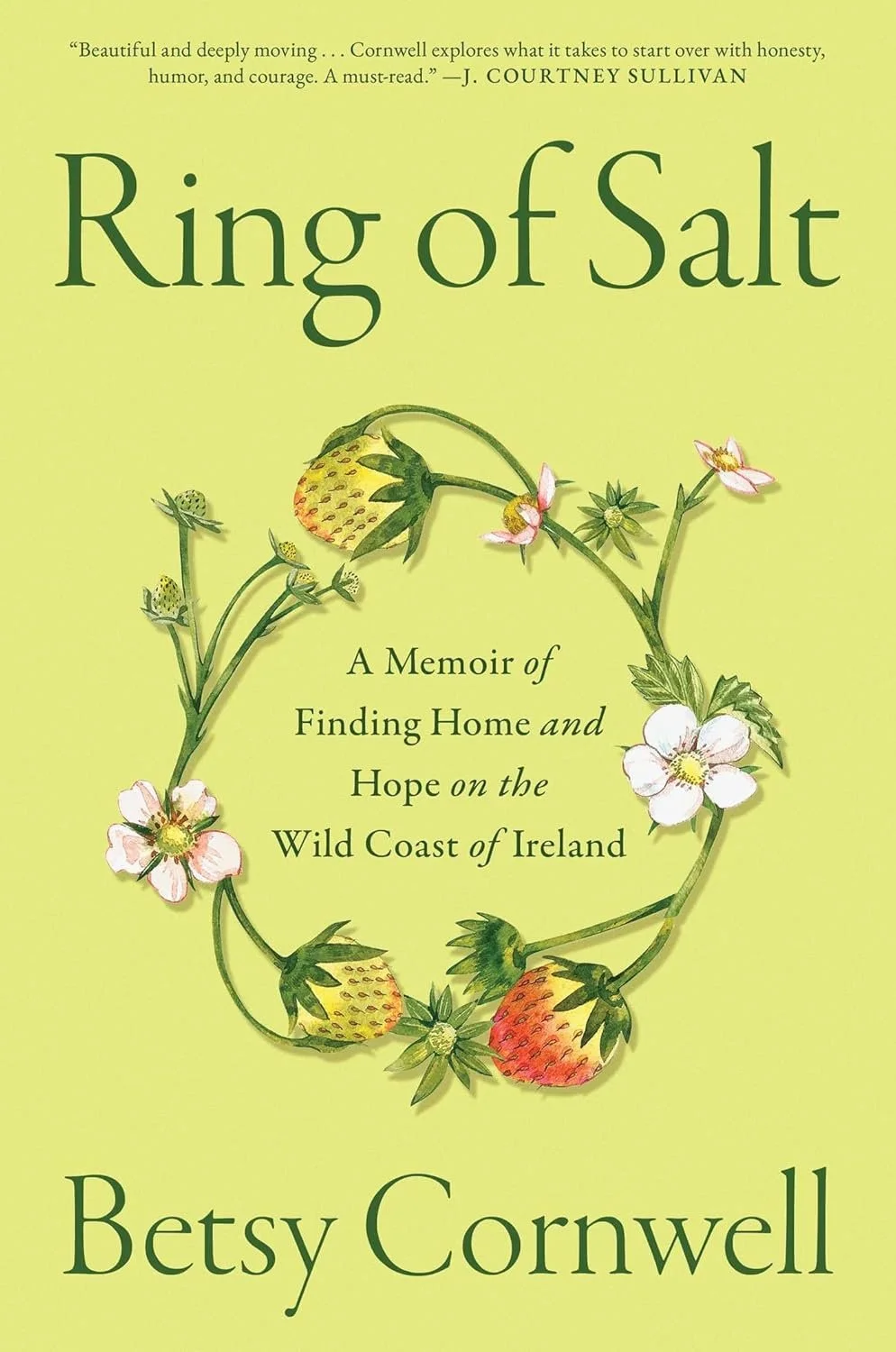
Ring of Salt: A Memoir of Finding Home and Hope on the Wild Coast of Ireland by Betsy Cornwell
At twenty-four, Betsy Cornwell runs from a painful past to Ireland for a fresh start. There she chases her dream of becoming a novelist, meets a handsome and charming horse trainer, and her life takes on the glow of a fairy tale when they elope to Gretna Green.
from the blurb:
“Five years later, her happy ending has twisted into a nightmare. Betsy is trapped in an abusive marriage, isolated and afraid with a newborn baby. On her son’s first birthday, she flees home again, this time turning to the women around her—her local survivor support group, a trusted family friend, and an online Smith College alumnae network—for help she’d never known she could ask for.
As she struggles to scrape together a living for herself and her son, she scrolls through real estate listings that might as well be castles in the air, and starts to foster an impossible dream: What if she could use her writing to buy a home, one that no one could take away from her and her baby? One that might become a haven, not just for her family, but other single parent artists and writers, too?
She discovers a historic knitting factory on Ireland’s rugged Connemara coastline, left empty for years, and that precarious dream becomes her lifeline. Over the next two years she works to crowdfund the old knitting factory’s purchase by sharing its story and her own, and her heartbreaking fight to keep custody of her son, with her growing online community. As the deadline to buy nears, this New York Times bestselling author who rewrites fairy tales for our modern times realizes she will have to reckon with everything she believes about family, survival, and what happily-ever-after truly means for her dream to have any chance of coming true.
Ring of Salt crafts a real-world fairy tale about the ordinary, but no less life-changing, forms of magic we can all access: vulnerability, community, and the power of telling your own story.”
I’d read about this knitting factory somewhere, and still can’t recall where, when another story about it popped up in the alumnae quarterly of my alma mater. I could not put this book down. Against all my own nearly seven decades of reading habits, I jettisoned everything else I was reading and sank into Betsy’ exquisite writing, heartbreaking storyline, praying/wishing/ dreaming/clapping-my-hands-so-Tinkerbelle-will-live until the very last word. Utterly brilliant.
&
Are you waiting for a sign?
How about this one?

Here’s a black box stage
just for you.
It’s got every and any
possibility you can
DREAM
if you will do the dreaming.
It’s lit with the spectrum.
It’s wired for sound.
We’re all watching,
and can’t wait to hear
whatever you have to say.
What’ll it be?
So often we imagine
ourselves with the power
to speak change
for the world into being.
Now, you can.
Here’s your chance.
Go for it.
&
I am, without doubt, certain that And is the secret to all we desire.
Let’s commit to practicing And ever more diligently, shall we?
Until next time,
Be Ampersand
&&&&